
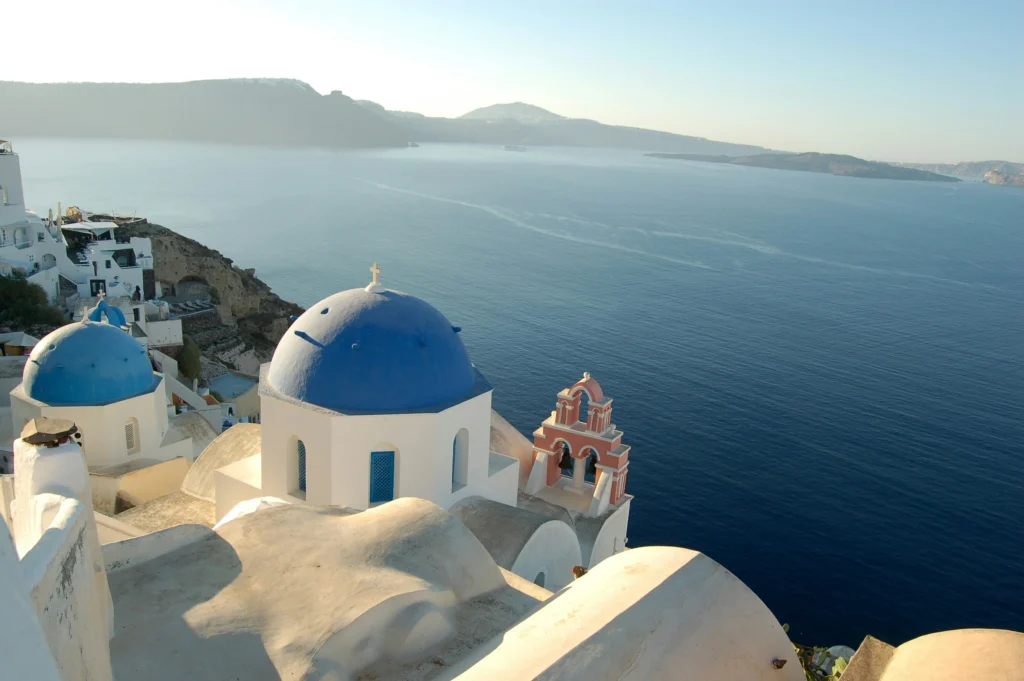
Greece is one of the most rewarding cruising grounds in the Mediterranean.
It is also one of the most varied.
You can spend one night in a quiet bay with nothing around you but pine trees, cliffs and crystal-clear water. The next night, you can be stern-to in a busy harbor town, walking straight off the passerelle into a waterfront taverna. A few days later, you might be anchored below ancient ruins, tucked behind a tiny island, or watching the sun drop behind a whitewashed village in the Aegean.
That is the beauty of sailing in Greece.
There is not just one type of anchorage. There are hundreds of them, spread across very different cruising areas. The Ionian Islands feel green, sheltered and forgiving. The Saronic Gulf offers easy island-hopping close to Athens. The Sporades bring pine-covered islands and quieter northern cruising. The Cyclades are dramatic, beautiful and more exposed. The Dodecanese stretch toward Turkey, with a mix of history, rugged landscapes and long-distance cruising.
But wherever you anchor in Greece, one thing matters more than the view.
Your boat needs to be secure.
Because once you go ashore for dinner, swim into the bay, walk up to a monastery, explore an old town, or finally get some sleep after a long day at sea, you do not want the same question sitting in the back of your mind:
Is the anchor holding?
Why Greece is such a special place to anchor
Greece is not just a marina-to-marina cruising destination.
For many boaters, the best parts of a Greek sailing season happen at anchor. The quiet bays. The early swims. The evenings when the boat sits still in clear water and the only sound is the chain shifting gently as the wind moves.
Part of what makes Greece so good for anchoring is the sheer variety.
In the Ionian, you might anchor off Meganisi, Kastos or Kalamos, surrounded by green hills and calm water. Around the Saronic Islands, you can move between Poros, Hydra, Dokos, Spetses and Aegina without huge distances between stops. In the Sporades, islands like Skopelos, Alonissos and Skiathos offer wooded bays and a very different feel from the southern Aegean. In the Dodecanese, places like Patmos, Leros, Lipsi, Symi and Kos open up a more rugged, eastern Greek cruising experience.
Some anchorages are about peace and quiet. Some are about swimming. Some are about access to villages, restaurants and nightlife. Some are practical stops for shelter. Some are the kind of places where you drop the anchor and immediately understand why people come back to Greece year after year.
The challenge is that Greek anchorages are not all simple.
Depth changes quickly. Some bays are crowded in high season. Wind can funnel down valleys or around headlands. The seabed can be sand, mud, weed, rock, or a frustrating mix of all four. In many places, especially smaller coves, boats often use shore lines rather than swinging freely.
So while Greece is a dream cruising destination, it still rewards careful anchoring.
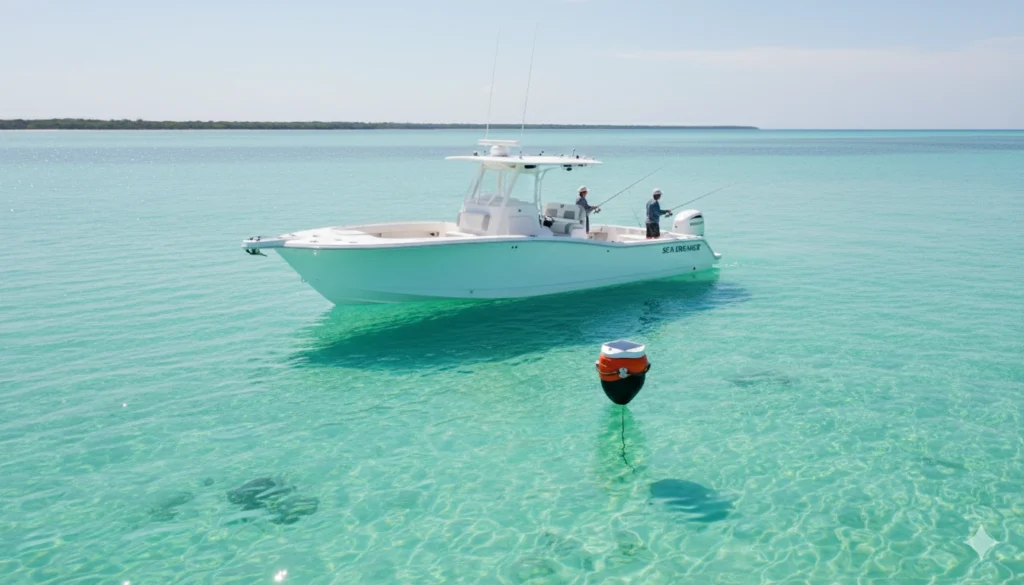
Anchoring styles in Greece: free-swinging, on the quay and shore lines
Before looking at specific regions, it is worth understanding how anchoring in Greece often works.
In some bays, you will anchor normally and swing freely around the anchor. This is the simplest setup, assuming you have enough room, the holding is good, and the wind direction is suitable.
In other places, especially narrow bays or popular coves, boats often drop the anchor and then take long lines ashore. This keeps the boat from swinging and allows more boats to fit into a sheltered space. It is common in parts of the Ionian, the Saronic, the Sporades and the Dodecanese.
You will also find stern-to mooring in town quays and harbors. In this setup, the anchor is dropped ahead of the boat, then the yacht reverses back toward the quay. Stern lines hold the boat close to shore, while the anchor keeps the bow off.
These setups are part of Mediterranean cruising, but they also put extra importance on the anchor.
If you are tied stern-to-shore or stern-to a quay, your anchor is not just there to stop the boat from drifting away. It is holding the boat in position. If it drags, the boat can move sideways, fall back, cross another boat’s chain, or put uncomfortable loads on the stern lines.
That is why Greece is such a strong case for proper anchor monitoring. You are often not just anchoring in an open bay with lots of space. You may be close to rocks, other boats, the shore, a quay, or a swimming area.
When the anchor moves, you want to know early.
Best anchorages in the Ionian Islands
The Ionian is one of the most popular cruising areas in Greece, especially for charter boats and long-term cruisers.
Compared with the Aegean, the Ionian often feels greener, softer and more protected. The distances between islands can be manageable, the water is beautiful, and there are plenty of bays, harbors and villages to explore.
That does not mean you can be casual. Anchorages still get busy, afternoon winds can build, and some bays need shore lines if you want to sit comfortably.
Meganisi
Meganisi is one of the classic Ionian cruising stops.
Just east of Lefkada, it has deep bays, clear water, waterfront villages and plenty of places to tuck in depending on the wind. Vathi and Spartochori are well-known stops, while the island also has smaller coves where boaters can anchor or tie back with shore lines.
Meganisi is the kind of place that sums up why people love the Ionian. You can swim in calm water during the day, go ashore for dinner in the evening, and still feel like you are in a relatively sheltered cruising area.
But the bays can get busy, especially in season. If you are anchoring with shore lines, make sure the anchor is well set before relying on the stern lines. If you are swinging freely, leave enough space for wind shifts and different swinging patterns between nearby boats.
Kastos and Kalamos
Kastos and Kalamos are quieter Ionian favorites.
They sit southeast of Lefkada and Meganisi and are often part of a South Ionian route. These islands feel more low-key than some of the busier charter stops, with small harbors, peaceful bays and a slower pace.
Kastos has a relaxed, traditional feel, while Kalamos offers shelter and access to a small village atmosphere. These are the kinds of places where anchoring is not just a practical choice, but part of the experience.
As always in Greece, check the depth and seabed carefully. Some bays can be deep close to shore, which makes scope more important. If you need to put out a lot of chain, think about your swing circle before settling in.
Kioni, Ithaca
Kioni on Ithaca is one of the most beautiful village stops in the Ionian.
It is not just a place to anchor. It is a place to go ashore, walk around, eat well and enjoy one of the most attractive harbors in the region.
Because of that, it can also be popular.
In and around small Greek harbors like Kioni, anchoring technique matters. Boats may be close together, lines may run in different directions, and there may be limited room to correct a mistake once you are committed.
If you are anchoring or mooring near other boats, always think about where your anchor and chain are lying. Crossing chains is a common Mediterranean headache, especially in busy town quays and harbors.
Vathi, Ithaca
Vathi is another major Ithaca stop and offers a larger, more enclosed setting than many small Ionian villages.
It can be a good place to pause, reprovision, explore and get a more settled night. But larger harbors still need proper attention to holding, wind direction and other boats.
In places like Vathi, it is easy to relax because the surroundings feel protected. That can be a mistake. A protected-looking bay can still experience gusts, shifting wind or poor holding in patches.
The basics still apply: choose the seabed carefully, use enough chain, set the anchor properly and monitor the boat overnight.
Sivota, Lefkada
Sivota on Lefkada is one of those Ionian stops that combines shelter, restaurants and a lively cruising atmosphere.
It is popular for a reason. The setting is beautiful, the village is right there, and it makes a natural stop on a Lefkada-based itinerary.
The downside of popular places is pressure. If you arrive late, you may find the best spaces already taken. That is when it is tempting to squeeze in, use less chain than you should, or accept a compromised position.
If the anchorage is full, it may be better to move on than to force a poor setup. A slightly less famous bay with a secure anchor is usually better than a perfect-looking spot where you spend the night worrying.
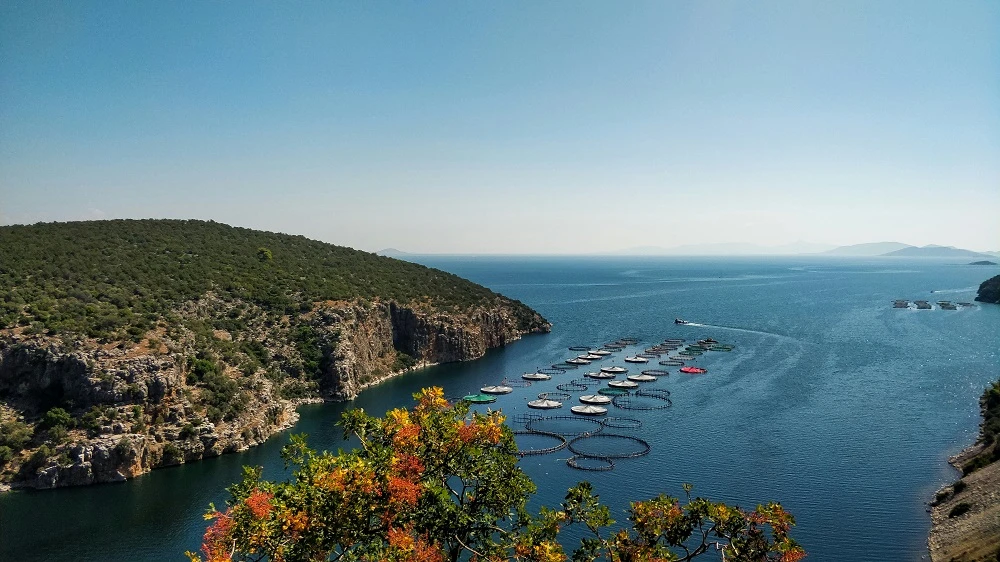
Best anchorages in the Saronic Gulf
The Saronic Gulf is one of the most accessible sailing areas in Greece.
It is close to Athens, the distances can be manageable, and the islands offer a brilliant mix of scenery, history, towns and anchorages. For many crews, the Saronic is a perfect introduction to Greek cruising.
It can also be busy. Because it is so accessible, popular stops can fill up quickly, especially in summer.
Poros
Poros is one of the best-known Saronic cruising destinations.
It has a beautiful town, sheltered waters, pine-covered surroundings and easy access from the Athens area. The channel between Poros and the Peloponnese is one of the most recognizable boating areas in the Saronic, and the island has plenty to offer ashore.
Poros is also a good example of why Greek anchoring is not always about remote bays. Sometimes the attraction is being close to town, restaurants, provisions and evening life.
That convenience comes with more traffic, more boats and more need for awareness. When anchoring around busy areas, make sure you understand where other boats are lying, whether they are anchored, on moorings, tied to shore, or moving in and out of the harbor.
Hydra
Hydra is one of Greece’s most iconic islands.
It is known for its stone mansions, car-free town, steep harbor, history, artists, writers and a very distinctive atmosphere. For many visitors, Hydra is a highlight of the Saronic.
From an anchoring perspective, though, iconic often means busy.
Hydra’s main harbor can be extremely crowded, and it is not the kind of place where you want to arrive unprepared. Rafting, crossed anchors and tight maneuvering can all become part of the experience.
For a more relaxed night, many boaters look at nearby alternatives depending on conditions, including bays around Dokos or other stops in the wider area. The key is to separate the desire to visit somewhere famous from the need to keep the boat safe.
Sometimes the best plan is to anchor securely elsewhere and visit by tender or choose the right weather window.
Dokos
Dokos is a different kind of Saronic experience.
Sitting between Hydra and the Peloponnese, it is much quieter and more remote. It is the kind of place where the anchorage itself is the reason to stop.
For boaters who want clear water, less noise and a more peaceful night, Dokos can be a strong choice. But quieter does not mean risk-free. You still need to read the wind, depth and seabed properly.
Remote anchorages can feel safer because there are fewer boats around, but they also give you fewer fallback options if the wind shifts or the anchor starts to move. Good monitoring is especially useful when you are relying entirely on your own setup.
Spetses
Spetses offers a mix of classic Greek island charm, waterfront life and good access to the Peloponnese coast.
It is another Saronic stop where the appeal is not just the anchorage itself, but what you can do once the boat is secure. Going ashore, exploring, eating out and walking through town are all part of the reason to be there.
That means you may leave the boat unattended for a while.
Before you do, make sure the anchor is properly set, the wind forecast is stable, and you have enough room if the wind shifts. If you are using an alarm system, confirm that it is active and reliable before you step away.
Best anchorages in the Sporades
The Sporades sit in the northwest Aegean and offer a very different feel from the Ionian or the Saronic.
Skiathos, Skopelos, Alonissos and the surrounding islands are known for green hills, pine forests, clear water and a slightly wilder atmosphere. For boaters looking for natural beauty, this region is a brilliant cruising ground.
The Sporades can also feel more exposed in certain conditions, so anchorage choice and wind direction matter.
Skopelos
Skopelos is one of the most scenic islands in the Sporades, with green slopes, small bays and a more relaxed feel than some of the busier Greek cruising areas.
There are anchorages and bays around the island that can be beautiful in settled weather. The appeal is simple: clear water, wooded hills and a quieter northern Greek atmosphere.
As with many Greek islands, the important thing is to choose based on the forecast, not just the scenery. A bay that looks perfect in one wind direction may be uncomfortable or unsafe in another.
Alonissos
Alonissos is a great choice for boaters who want a more natural, less overdeveloped cruising experience.
It sits close to the National Marine Park area and has a feeling of space, nature and quieter cruising. There are bays where you can feel properly away from the more crowded charter circuits.
Because the area is more natural and in places environmentally sensitive, boaters should pay close attention to local rules, no-anchoring zones and seabed protection. Always check current local guidance and avoid dropping anchor where anchoring is restricted.
The more remote the anchorage feels, the more important it is to be self-reliant. Good anchoring technique, enough scope and proper monitoring make it much easier to enjoy these quieter stops.
Skiathos
Skiathos is busier and more developed than some of the neighboring islands, but it has plenty of appeal for cruising boats.
There are beaches, bays, nightlife, restaurants and easy access, which makes it attractive for many crews. It can be a good place to mix anchoring with a more social stop.
The tradeoff is that popular areas can be crowded. As with the Balearics, Croatia or anywhere else in the Mediterranean, crowded anchorages create temptation to compromise.
Do not reduce scope just to fit in. Do not anchor too close to boats on moorings. Do not assume everyone will swing the same way overnight.
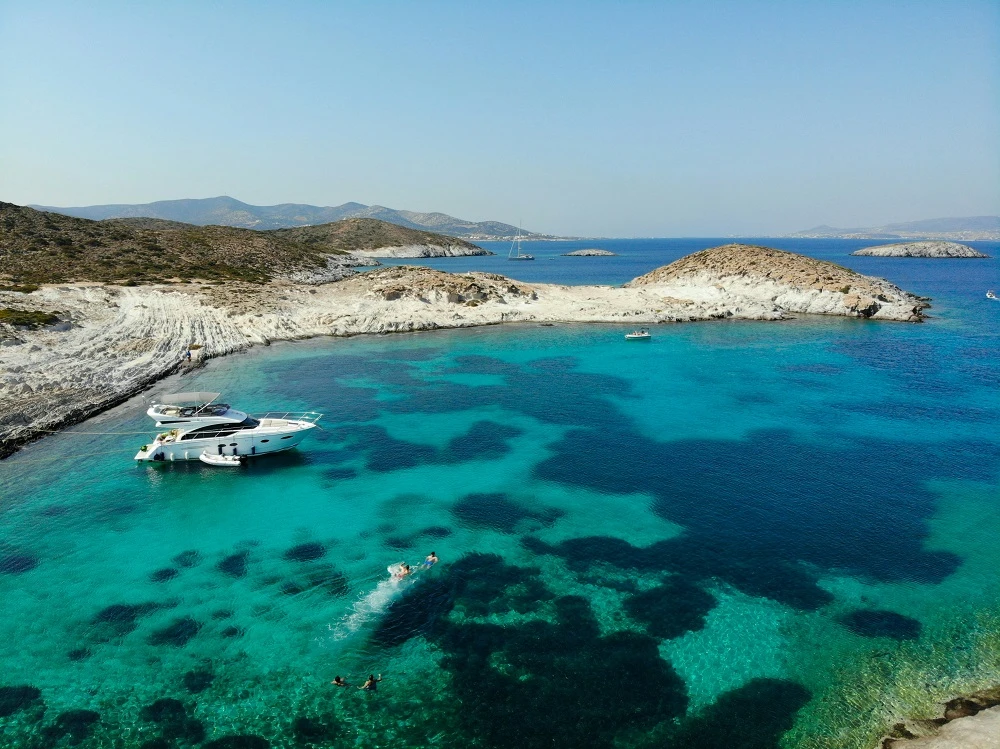
Best anchorages in the Cyclades
The Cyclades are some of the most famous islands in Greece.
Santorini, Mykonos, Paros, Naxos, Milos, Syros, Sifnos, Serifos, Kythnos and many others sit across a wide and often windy part of the Aegean. The landscapes are dramatic, the villages are beautiful, and the sailing can be unforgettable.
But the Cyclades deserve respect.
The Meltemi can blow hard in summer, and many anchorages are more exposed than they look. Distances can be longer, shelter can be more limited, and gusts can accelerate around islands.
This is not a region where you want to be casual about anchoring overnight.
Kythnos
Kythnos is a useful and popular Cycladic stop, especially for boats moving between the Saronic and the central Aegean.
Kolona Bay is one of the better-known anchorages, famous for its narrow sandbar and beautiful setting. In the right conditions, it can be spectacular.
Because it is well known, it can also get busy. And because it is in the Cyclades, wind direction matters. If the weather is settled, it can be a memorable stop. If the wind is wrong or the bay is overcrowded, it may not be the peaceful anchorage you had in mind.
Milos
Milos offers some of the most dramatic scenery in Greece.
The island has volcanic landscapes, unusual rock formations, clear water and anchorages that feel very different from the greener Ionian or Sporades. For many cruisers, Milos is one of the most memorable islands in the Cyclades.
The large natural harbor can offer options, but the island is still exposed to Aegean weather patterns. Around Milos, shelter depends heavily on wind direction, and some of the most beautiful places are only suitable in settled conditions.
The lesson is simple: never anchor for the photo. Anchor for the forecast.
Paros and Naxos
Paros and Naxos are major Cycladic destinations, with beaches, towns, restaurants, history and strong cruising appeal.
They also sit in an area where summer winds can be significant. Anchorages may be comfortable one day and uncomfortable the next, depending on the Meltemi and local shelter.
If you are anchoring in this area, give yourself margin. Use enough chain, avoid tight spaces, and think carefully before leaving the boat for long periods.
When the wind is up in the Cyclades, a dragging anchor can become a serious problem quickly.
Best anchorages in the Dodecanese
The Dodecanese sit in the southeastern Aegean, stretching toward the Turkish coast.
This region includes well-known islands like Kos, Rhodes, Patmos, Leros, Kalymnos, Symi, Lipsi and Astypalaia. It is a fantastic area for longer cruising, with history, monasteries, castles, rugged coastlines, clear water and strong cultural variety.
It is also a region where distances, wind and exposure need to be taken seriously.
Patmos
Patmos is one of the standout islands in the Dodecanese.
It is famous for its religious history, monastery, whitewashed Chora and rugged beauty. For cruising boats, it offers a mix of anchorages, harbor options and access to one of the most atmospheric islands in Greece.
The appeal of Patmos is not just staying on the boat. It is going ashore, exploring, walking up into town, visiting historic sites and spending time away from the anchorage.
That makes security important.
Before leaving the boat, make sure the anchor is properly set and the forecast gives you confidence. If you are anchored rather than moored, use an alarm system you trust.
Lipsi and Arki
Lipsi and Arki offer a quieter Dodecanese experience.
They are smaller, more relaxed and often appeal to cruisers looking for less-developed stops. The water can be stunning, and the pace is slower than on larger islands.
In places like these, the anchorage itself is part of the reward. You might be swimming, exploring by tender, or going ashore for a simple dinner.
But smaller islands can also mean fewer facilities and fewer quick alternatives if conditions change. Good shelter, proper scope and reliable monitoring matter.
Leros
Leros is a practical and attractive cruising island with several bays and harbor options.
It is popular with long-term cruisers and has a more lived-in feel than some purely tourist islands. The island’s shape creates multiple potential shelter options depending on wind direction.
That makes Leros a useful stop, but you still need to choose the right side of the island for the conditions. Do not assume that because one bay is sheltered today, it will be the right choice tomorrow.
Symi
Symi is one of the most visually striking islands in Greece.
The colorful harbor town is famous, and the island’s steep, rocky landscape makes a strong impression from the water. It is also a popular stop, especially for boats cruising between Rhodes, Kos and the Turkish coast.
Because Symi is dramatic and steep-sided, anchoring can involve deeper water and limited space in some areas. This is where scope planning becomes important. If you are in deeper water, you need more chain to achieve the same holding angle.
If you cannot put out enough chain safely, choose another spot.
Anchoring overnight in Greece: what to think about
A Greek anchorage can feel completely calm at sunset.
That does not mean it will stay that way all night.
Before anchoring overnight, think about four things: holding, scope, swinging room and wind changes.
Good holding usually means sand or mud where the anchor can dig in. Weed, rock and thin sand over hard ground are more questionable. In clear water, it is often worth swimming over the anchor to check it visually.
Scope is the amount of chain or rode you let out compared with the depth. In calm conditions, 3:1 may be the minimum. For more comfortable overnight anchoring, 5:1 is usually a better target. If stronger wind or gusts are expected, you may want closer to 7:1 where possible.
Swinging room is the space your boat needs if the wind changes. This becomes especially important in Greek bays where some boats are swinging freely, some are tied to shore, some are on moorings, and others are stern-to a quay.
Wind changes are the final piece. Greece has many local effects. Gusts can fall from hillsides. The Meltemi can affect the Aegean. Afternoon breezes can build. A bay that is protected from one direction may be exposed from another.
Good overnight anchoring is not about finding the prettiest water. It is about finding the right shelter for the night ahead.
Why shore lines are so common in Greece
In many Greek anchorages, especially narrower bays and coves, you will see boats anchored with stern lines ashore.
This is not just for style. It is practical.
Shore lines stop boats swinging into each other and allow more yachts to fit into a protected bay. They can also keep the bow facing the expected wind or swell, depending on the setup.
But shore lines do not reduce the importance of the anchor. They increase it.
When you are tied back to shore, your anchor is usually holding the bow and keeping the boat positioned. If the anchor drags, the boat may move sideways, put heavy strain on the lines, or end up dangerously close to rocks, another boat or the shoreline.
A good shore line setup starts with a good anchor set.
Drop in the right place, use enough chain, reverse to set the anchor properly, then take lines ashore once you know the anchor is holding. Do not rush the process just because other boats are watching or the bay is busy.
The best anchorage is the one where you can relax
There are plenty of lists of the best anchorages in Greece.
Some focus on beauty. Some focus on towns. Some focus on swimming. Some focus on the most famous stops.
But for cruising boaters, the best anchorage is not just the prettiest one.
It is the one where you can actually relax.
That might mean a quiet bay in the Ionian where you can swim off the stern all evening. It might mean a sheltered spot near Poros where you can go ashore for dinner. It might mean a remote stop in the Sporades with pine trees all around you. It might mean a Dodecanese anchorage where you can leave the boat and explore an old monastery, castle or village.
The whole point of anchoring in Greece is to enjoy the place.
You should be able to swim, sleep, eat, explore, hike, snorkel, go ashore and enjoy the cruising life without constantly checking whether the boat is still where you left it.
That does not happen by accident.
It comes from choosing the right anchorage, setting the anchor properly, using enough scope, allowing for wind shifts and having a way to know if something changes.
How Morphéis helps when anchoring in Greece
Even with good technique, anchoring is never completely risk-free.
You can choose a good bay, drop in sand, put out enough chain, set the anchor carefully and still have a problem later. The wind can shift. Another boat can drag toward you. The anchor can trip and fail to reset. A gust can arrive in the middle of the night. The seabed can be less reliable than it looked from the surface.
Traditional anchor alarms can help, but most of them monitor the boat’s GPS position.
That creates a problem.
At anchor, the boat is supposed to move. It swings with the wind and current. In Greece, that movement can be even more complicated because nearby boats may be using completely different setups. Some may be free-swinging, some tied to shore, some on mooring buoys, and some stern-to on a quay.
So the real question is not simply, “Has the boat moved?”
The better question is, “Has the anchor moved?”
That is where Morphéis comes in.
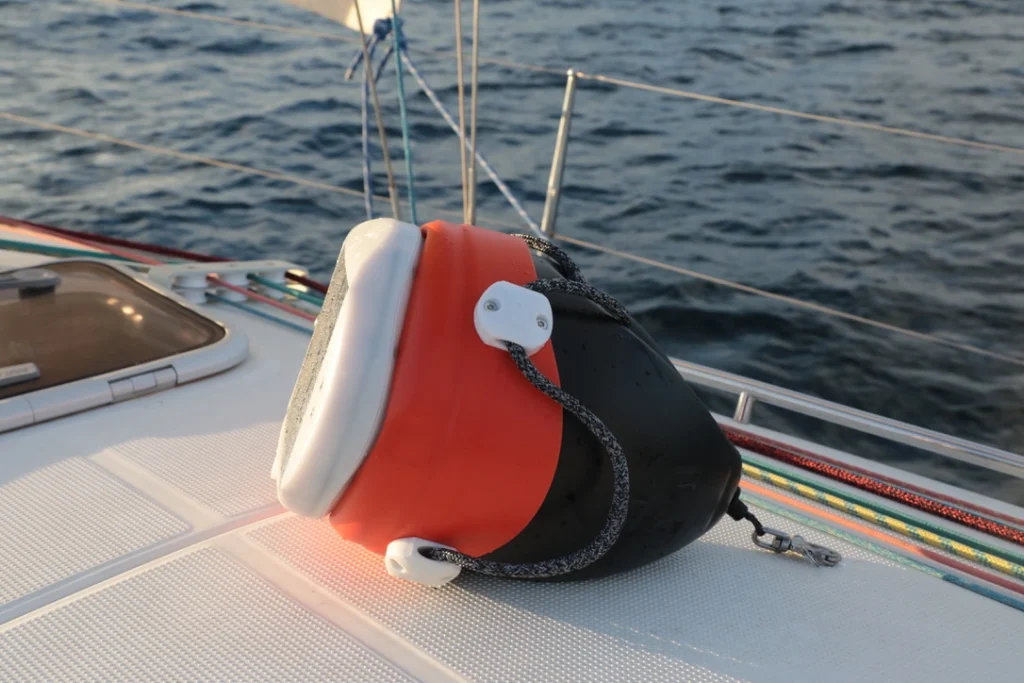
Morphéis is designed to monitor the anchor itself, giving boaters a clearer understanding of what is happening where it matters most: at the point holding the boat.
For long-term cruising in Greece, that can make a real difference. It means more confidence when you go ashore. More peace of mind overnight. Less second-guessing every noise, gust or movement. And a better chance of knowing early if the anchor starts to move.
Greece gives boaters some of the most beautiful anchorages in the Mediterranean.
Morphéis helps you enjoy them with more confidence.
The Best Anchorages in Greece are unique
The best anchorages in Greece are not all the same.
Some are quiet and remote. Some are busy and social. Some are perfect for swimming. Some are better for restaurants, history and exploring ashore. Some are easy. Some need careful planning, shore lines and a close eye on the forecast.
That diversity is what makes Greece so special.
From Meganisi, Kastos, Kalamos, Ithaca and Lefkada in the Ionian, to Poros, Hydra, Dokos and Spetses in the Saronic, to Skopelos, Alonissos and Skiathos in the Sporades, to Patmos, Lipsi, Leros and Symi in the Dodecanese, there is no shortage of places worth dropping anchor.
Just remember: the best anchorage is not the one that looks best in a photo.
It is the one where the boat is secure, the anchor is holding, and you can actually enjoy being there.
