


If you’re wondering what to do if your anchor drags, start by getting the boat under control and checking what’s behind you. Start the engine, bring the crew on deck and assess your room to manoeuvre.
You don’t need to diagnose every possible cause before acting. If you’re closing on rocks, another boat or shallow water, respond immediately rather than waiting for another alarm.
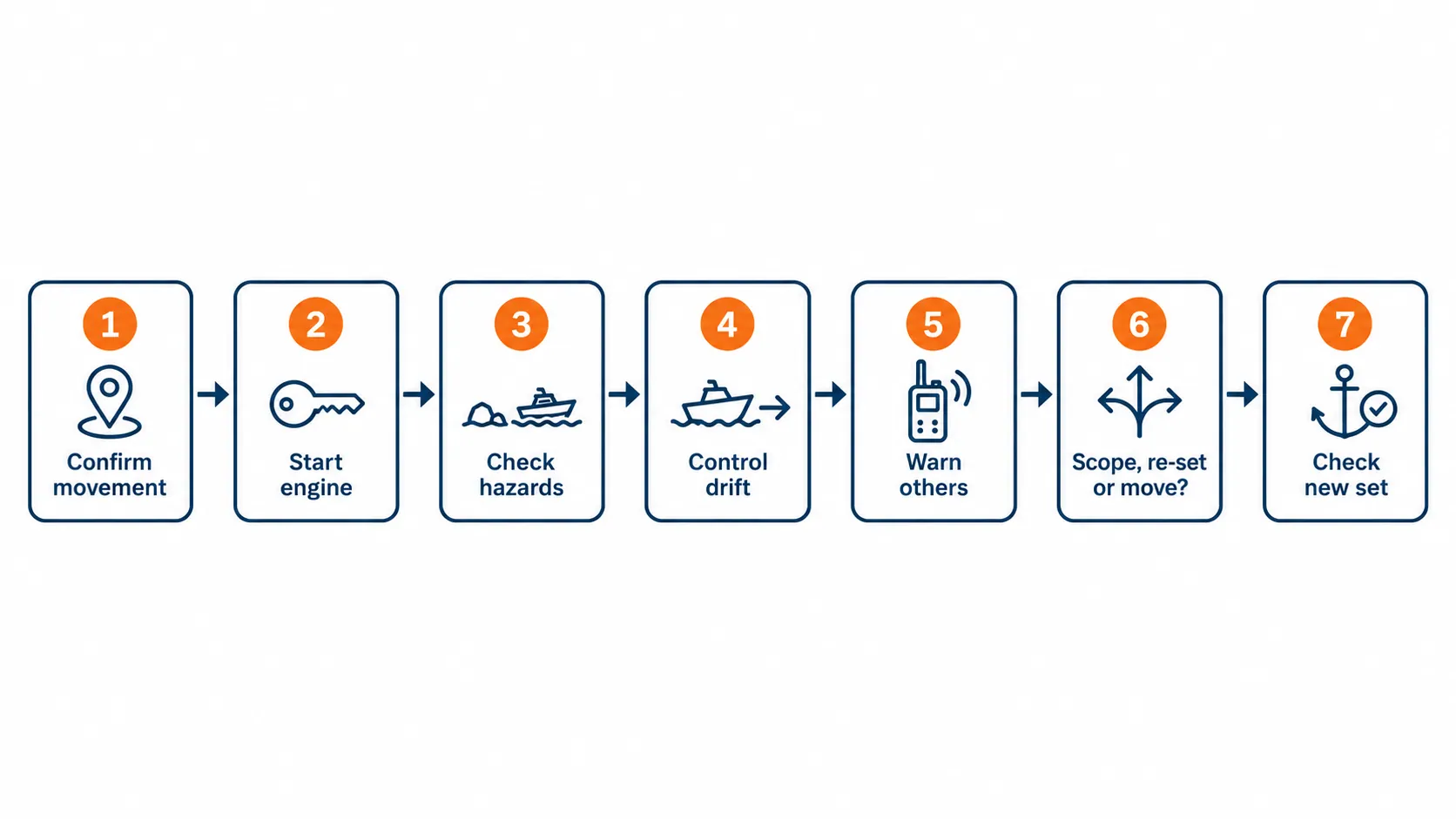
Your seven-step plan: what to do if your anchor drags
1. Confirm the movement without delaying action
Look for sustained movement beyond your normal swinging area, using fixed shore references, your plotted position and the depth reading together. A changing view or one GPS jump alone doesn’t prove the anchor is dragging.
Our guide to recognising the signs of anchor dragging explains the distinction. If the gap to a hazard is shrinking, get ready to manoeuvre while you check.
2. Start the engine and make the crew ready
Start the engine using your boat’s normal checks, and make sure propulsion is available. Before engaging gear, check that dinghy painters, buoy lines and other loose ropes are clear of the propeller.
Get everyone on deck into lifejackets and suitable footwear. Keep instructions short: one person at the helm, one looking out, and a capable person ready at the bow if available.
3. Find your position and your escape route
Identify the nearest hazards, the direction you’re drifting and a route into clear, navigable water. Check the chart against what you can see, including depth, nearby boats and their anchor cables.
A lee shore is a shore the wind is pushing you towards. If one is close, protecting your remaining manoeuvring space takes priority over saving your original spot.
4. Use the engine to reduce the drift
Use controlled power to oppose the drift and ease the load on the anchor cable, adjusting for wind, current and your boat’s handling. Keep watching your position; an engine running in neutral isn’t controlling the boat.
Avoid driving over your own cable or across someone else’s. If you’re alone, maintain control from the helm before attempting work at the bow.
5. Warn others and call for help when needed
Alert a neighbouring boat if you’re moving towards it, and keep the VHF ready. Don’t wait until you’ve exhausted every option if propulsion has failed or you can’t keep clear of danger.
Use Mayday on VHF Channel 16 for grave and imminent danger requiring immediate assistance; Pan-Pan is for an urgent situation without that immediate danger. Follow your radio’s distress procedure, including a DSC distress alert if fitted when making a Mayday: the RYA’s guidance on Mayday and Pan-Pan calls explains the distinction.
6. Choose more scope, a fresh set or a move
Extra scope may help if there’s room and the anchor can still take hold. If dragging continues, or the ground or shelter is unsuitable, prepare to recover the anchor and move.
Make that decision while you still have space. Don’t keep paying out chain as the boat approaches a hazard.
7. Recover, reposition and check the new set
If you need to re-anchor, recover under control and select your next position before lowering again. Use the detailed sequence below once the immediate danger is managed.
Knowing what to do if your anchor drags includes checking the result: when propulsion is no longer holding you in place, does the anchor hold? Keep a lookout and verify your position before standing the crew down.
At night: what to do if your anchor drags
Anchor dragging at night calls for the same actions, with more deliberate checks because distances and boats can be harder to judge. Wake the crew promptly, use a torch where needed and keep someone watching outside rather than everyone staring at a screen.
Use the appropriate navigation lights when you get under way. Keep deck lighting directed at the job so it doesn’t dazzle the helm or obscure other boats’ lights.
Agree simple calls between the bow and helm before recovering. Hand signals may be difficult to see, so use clear voice communication or suitable radios if you have them.
An anchor drag alarm is a warning to investigate, even if earlier alarms proved harmless. Check the boat’s track, depth and surroundings before deciding it’s simply a swing.
For many people, a phone app or chartplotter anchor alarm is enough. Our guide to choosing an anchor alarm for your boat helps you check the practical details, including power, settings and whether you’ll hear it from your bunk.
Should you let out more scope, re-set or move?
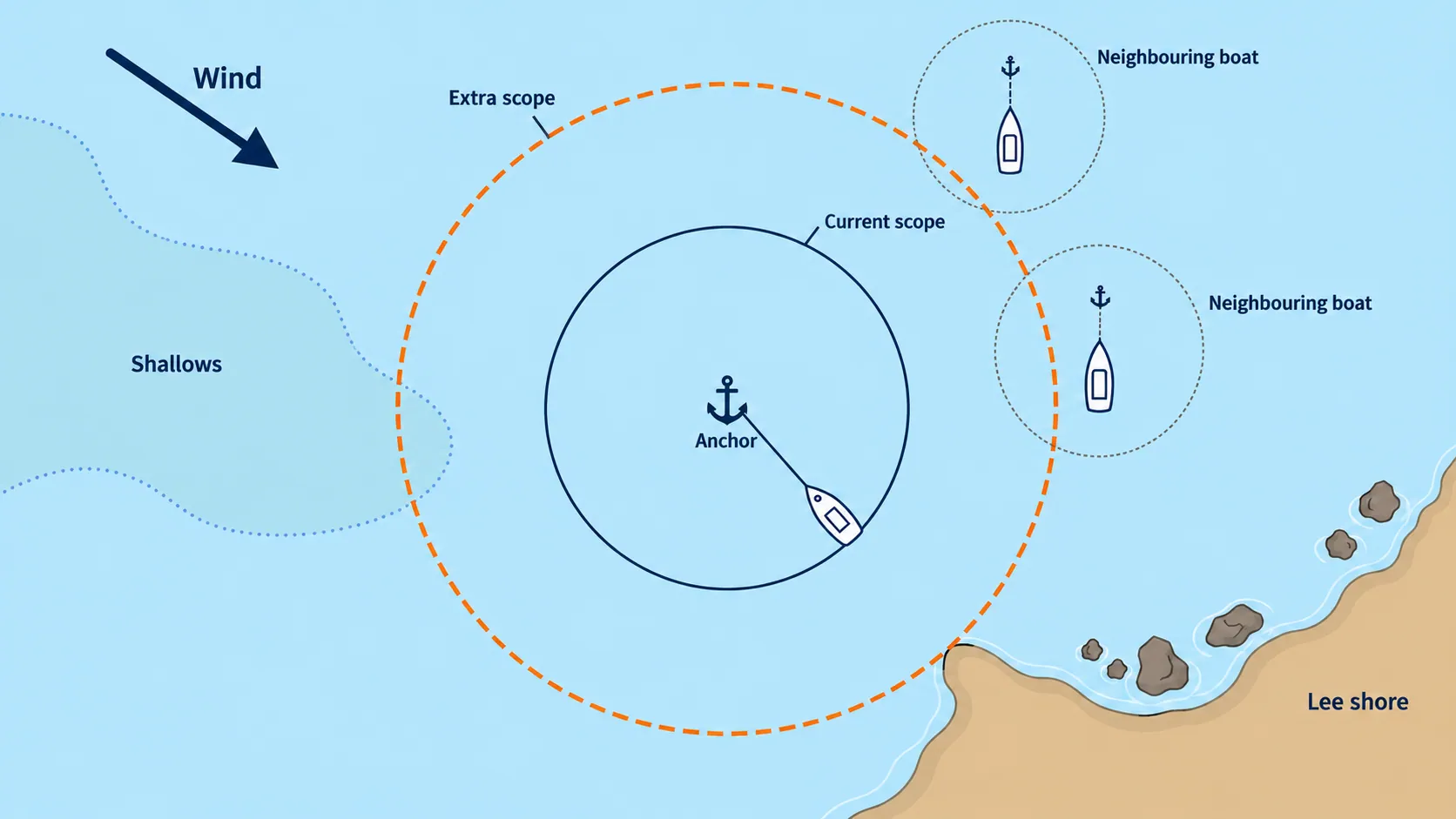
Deciding what to do if your anchor drags depends on holding ground, available space and the changing conditions. More chain is useful only if it helps the anchor hold without putting the boat somewhere unsafe.
Let out more scope when insufficient scope appears to be the problem, the seabed is suitable and you have ample swinging room. Pay it out under control, then check whether movement stops once the engine is no longer supporting the boat.
Scope means the length of chain or rope deployed relative to the vertical distance from the bow roller to the seabed. Include the height of the bow roller and the expected rise of tide; our guide to how much anchor chain to let out covers planning that length.
Re-set when the first set is doubtful but the anchorage still offers suitable ground and shelter. Retrieve and inspect the anchor rather than assuming more chain will solve a fouled fluke.
Move when your present position lacks room, holding or protection. A change in wind direction at anchor can swing the boat and change the pull on the anchor, which may break out instead of re-setting.
How to re-anchor properly, step by step
Once you’ve worked out what to do if your anchor drags, take the next set carefully. A rushed repeat in the same patch can leave you with the same problem.
- Choose a better position. Check the chart, depth, seabed, shelter and swinging room through the expected wind and tide changes. Allow for neighbouring boats to swing differently.
- Recover under control. Manoeuvre towards the anchor as the cable is retrieved, keeping the bow crew and helm in communication. Don’t use the windlass to haul the boat bodily against wind or current.
- Inspect the anchor. Once it’s safely aboard, check for weed, debris or chain wrapped around it. Keep hands and feet clear of moving chain and the windlass.
- Lower into the chosen spot. Stop or nearly stop over the position, accounting for wind and current. Lower the anchor, then lay out the cable progressively as the boat moves back.
- Deploy suitable scope. Use your gear’s guidance, the conditions and the available space to choose the length. Avoid dropping a heap of chain onto the anchor.
- Set and test it. Take up the slack gently, then apply controlled astern power appropriate to the boat and gear. Watch fixed references and the plotted position for sustained movement.
- Secure and monitor. Transfer the holding load to the appropriate strong point, chain stopper or snubber arrangement for your boat. Update the alarm for the new anchor position and scope, then watch the boat with the engine in neutral.
If the set fails, recover and reconsider the ground or location. Repeated attempts need a reason to expect a better result.
When to leave the anchorage altogether
Sometimes what to do if your anchor drags is straightforward: leave while you can still do so safely. Worsening weather, repeated failed sets, poor holding or dwindling room are good reasons to stop trying to stay.
Choose the destination and route before departure. Another anchorage, a suitable harbour or navigable open water may offer a better option, depending on the conditions, your boat and the crew.
If you can’t recover the anchor without losing control or entering danger, prioritise people and the boat, and call for assistance. Don’t send anyone into the water to deal with the anchor during an active dragging incident.
How to reduce the chance next time
Review what changed once you’re settled safely. The common causes of anchor dragging are a useful starting point for checking the seabed, initial set, scope and conditions.
Before settling down, test the set, consider the whole swinging area and check the forecast and tidal changes. Prepare a departure route and make sure the crew know how to start the engine and raise the alarm.
Practise what to do if your anchor drags while conditions are easy. Knowing where the torch, lifejackets and windlass controls are makes a disturbed night more manageable.
Set your anchor alarm around the anchor position, with allowance for normal swing and GPS uncertainty, following its instructions. Check power and audibility, and keep an active watch when conditions warrant it.
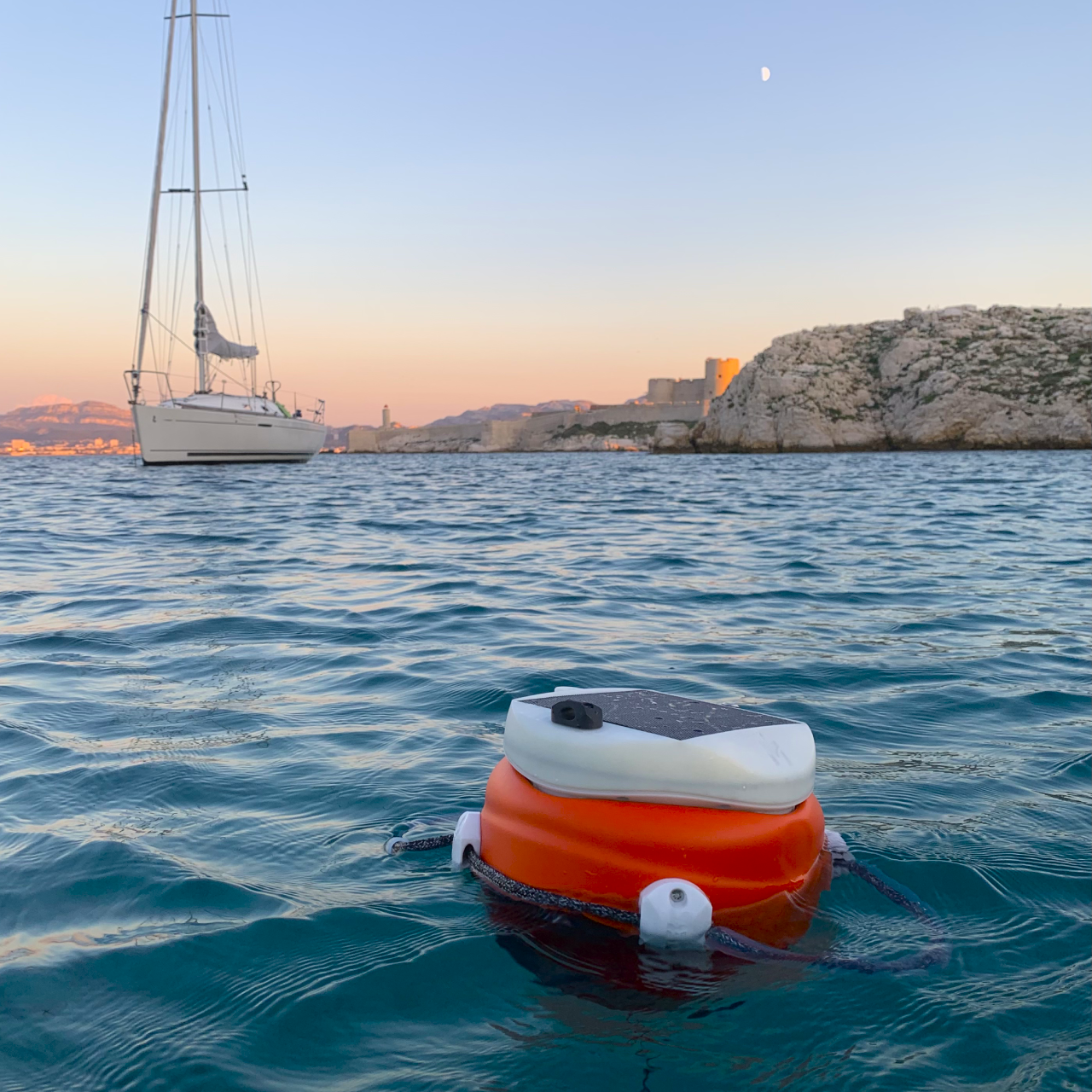
The Morphéis GPS anchor buoy sits above the anchor and uses GPS there to alert you to anchor movement, rather than only tracking the boat’s position. It’s another monitoring option, alongside good anchoring practice and the skipper’s own judgement.
Frequently asked questions
Anchor dragging: what to do first?
Start the engine, alert the crew and check your clearance from hazards. Confirm movement alongside those actions; don’t wait for certainty if danger is closing.
Can I stop dragging by adding more chain?
Sometimes, if insufficient scope is the issue and there’s ample room. It won’t reliably solve poor holding ground or a fouled anchor, so check the result.
Does an anchor alarm prove I’m dragging?
No: boat swing, GPS uncertainty or unsuitable settings can trigger an alarm. Investigate promptly using your surroundings, depth and position.
Should I use full reverse to set the anchor?
Build the load progressively, using power appropriate to your boat, anchor and equipment guidance. A sudden heavy pull can disturb a set before it develops.
How do I know it’s safe to settle down again?
Check that the anchor holds without engine assistance, your clearance remains adequate and the alarm is correctly reset. Keep watching if conditions are unsettled.
Knowing what to do if your anchor drags starts with a calm plan and ends with a checked set. If you’d like to explore monitoring the anchor itself, find out whether Morphéis suits the way you anchor.