

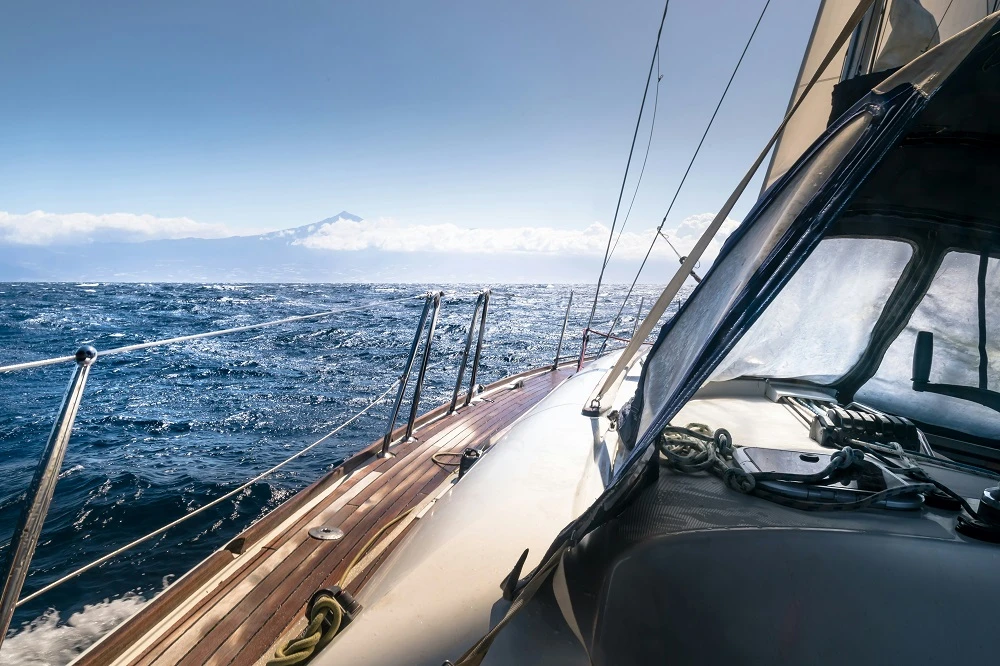
You drop the anchor, pay out the right amount of chain and reverse gently until it is properly set. The boat settles head-to-wind, the anchor is holding and everything feels secure.
That initial preparation still matters. Avoiding the most common anchoring mistakes – including poor seabed selection, inadequate scope and failing to test the set – gives the anchor its best chance of coping when the weather changes later.
Then the wind changes direction.
Perhaps it turns gradually with the weather. Perhaps the afternoon breeze dies and a land breeze replaces it. Maybe a squall arrives and shifts the wind through 90 or even 180 degrees in minutes.
Your boat begins to move – but does that mean the anchor is dragging?
Usually, no. A boat is expected to swing at anchor as the wind or current changes. What matters is what happens when the load reaches the anchor from a new direction. The anchor may remain buried and rotate, briefly break free and reset, move slowly through the seabed, or fail to regain a secure hold.
The difficulty is that all of this happens out of sight.
The Short Answer
When the wind changes direction, the boat normally swings around its anchor until its bow faces the new wind. As the boat moves, the chain or rode gradually changes direction and applies a new load to the anchor.
A well-set anchor in suitable holding ground will often remain buried, rotate in the seabed or reset after moving a short distance. But no anchor can be guaranteed to reset successfully in every seabed and every set of conditions.
That is why a wind shift should be treated as a change worth observing, rather than automatically as an emergency – or automatically as nothing to worry about.
First, the boat swings around the anchor
With a single anchor, a boat is free to move within a circle determined largely by the position of the anchor and the amount of rode deployed. This is its swinging circle.
As the wind turns, pressure on the hull, rig and superstructure encourages the boat to face the new direction. The bow moves through an arc around the anchor while the chain may briefly slacken, lie in a curve on the seabed and then become loaded from a different direction.
This movement is normal. In fact, the RNLI’s anchoring guidance specifically advises allowing a safe swinging circle because wind and tide affect a boat’s position and can change without warning.
Not every boat in an anchorage will swing in exactly the same way. Differences in hull shape, windage, keel profile, rode type and scope can cause neighbouring boats to move at different speeds or through different arcs. Multihulls, monohulls and motorboats may behave differently even when anchored close together.
Current can complicate things further. If the wind and current are acting from different directions, some boats may lie primarily to the wind while others lie more strongly to the current.
This is why a boat moving relative to a neighbour is not, by itself, proof that either boat is dragging.
What Happens to The Anchor Below the Surface?
Once the boat has moved far enough for the rode to become loaded again, the direction of pull at the anchor changes.
Several outcomes are possible.
1. The Anchor Remains Buried and Turns
In favourable conditions, the anchor may pivot or rotate within the seabed while remaining substantially buried. The boat completes its swing, the load settles in the new direction and the anchor continues holding.
From onboard, this may look completely uneventful.
2. The Anchor Moves and Resets
The change in direction may partially or fully disturb the anchor. It can move through the seabed before its fluke finds the correct attitude, digs in again and develops holding power in the new direction.
This movement might be short, but it is still movement. Whether it matters depends on the available space, the seabed and how quickly the anchor regains its hold.
3. The Anchor Drags While Remaining Buried
An anchor does not always jump cleanly out of the bottom. Under a load beyond what the seabed can resist, it may remain buried but plough slowly through sand or mud.
That can create a controlled-looking movement rather than a dramatic breakout. The boat is nevertheless changing position and may continue doing so until the load reduces or the anchor develops more resistance.
4. The Anchor Breaks Free and Does Not Reset
If the anchor comes out of the seabed, lands badly, becomes obstructed or collects weed, mud or debris, it may not dig in again promptly. The boat can then move downwind while the anchor skips, slides or trails across the bottom.
This is the situation every skipper wants to identify early—not after the boat has already travelled towards another vessel, shallow water or the shore.

What Determines Whether an Anchor Resets?
Anchor design matters, but it is only one part of the answer. Our guide to choosing the best anchor for your boat explains how respected modern designs approach setting and holding without presenting any one model as universally superior. Resetting is still affected by the complete situation in which the anchor is working.
The Seabed
An anchor needs penetrable ground it can engage with. Sand, mud, clay, weed, gravel and rock all behave differently. Even within one bay, a thin layer of sand over rock can produce a very different result from deep, consistent sand.
An anchor that initially set in one patch may be pulled into a different patch when the load changes direction.
This is particularly relevant in cruising grounds where exposed bays, weed and rapidly changing local winds can exist close together. Our guide to the best anchorages in Greece and how to stay secure overnight includes practical examples of why shelter, seabed and overnight conditions must be considered together.
The Speed and Size of The Wind Shift
A slow change gives the boat, rode and anchor time to realign progressively. A sudden squall or frontal passage can load the system quickly from a new angle.
A complete reversal is especially significant because the anchor may be asked to hold from almost the opposite direction to the one in which it was originally set.
Scope and the Angle of Pull
Anchors generally develop their holding power most effectively when the pull is close to horizontal. Sufficient scope helps maintain a lower angle of pull; too little can increase the upward component and make it easier to disturb the anchor.
BoatUS notes that too little scope can allow movement in a shifting wind to jerk an anchor out. If you are unsure how to calculate your rode, see our guide to how much anchor chain to let out.
Shock Loading
The chain does not always tighten gently. Waves, yawing and gusts can bring the boat up sharply against the rode. A correctly sized snubber or bridle can absorb some of this energy and reduce abrupt loads on the windlass, bow fittings and anchor.

Fouling and Seabed Material
Weed, sticky mud, stones, discarded line and other debris can affect how an anchor penetrates or resets. The anchor may have held perfectly before the wind shift but behave differently after being pulled into new material.
The Way the Boat Moves
Boats with high windage or a tendency to sheer from side to side can impose changing and sometimes sharp loads on their ground tackle. A new wind direction can also change the relationship between wind and swell, increasing movement even if the forecast wind speed has not risen dramatically.
Normal Swing or Anchor Drag?
This is the question that causes so many disturbed nights.
Normal swinging generally produces movement around a stable central point. The boat changes heading and travels through an arc, but remains at roughly the expected distance from the anchor.
Dragging produces movement of the anchor point itself. The whole swinging pattern begins migrating across the chart or towards a hazard.
Traditional checks include:
- watching two fixed points on shore as a transit;
- monitoring depth and comparing it with the expected tidal change;
- checking the bearing and distance to several fixed objects;
- feeling the chain or rode for persistent vibration;
- examining the boat’s GPS track;
- comparing your position with several neighbouring boats.
These are valuable seamanship skills, but most of them observe the boat rather than the anchor.
That distinction becomes important during a wind shift. A boat may travel a considerable distance around a perfectly stationary anchor, especially with a long scope. A phone app or chartplotter monitoring the boat must decide whether this movement is normal or dangerous using a radius selected by the user.
Set the radius too tightly and normal swinging can produce repeated alarms. Set it too widely and the anchor may move some distance before the boat crosses the boundary.
Our comparison of the best anchor alarms for boats examines this difference between phone apps, chartplotters and dedicated anchor-monitoring systems in more detail.
What Should You Do When The Wind Changes?
A change in wind direction is a prompt to reassess the anchorage, not necessarily to panic.
- Confirm the new wind strength and direction. A gentle turn is different from the leading edge of a squall.
- Check your new swinging circle. Look for boats, shorelines, rocks, shallow water and other hazards that may now be downwind.
- Observe more than one reference. One nearby boat may swing differently from yours, so compare fixed bearings, depth and your overall GPS track.
- Check the rode. Look for snatching, unusual vibration, an unexpected direction of lead or signs that the snubber or bridle is not sharing the load correctly.
- Prepare the boat. If conditions are deteriorating, make sure the engine is ready, the helm is clear and the crew know what may be required.
- Act early if the anchor is moving. Starting the engine can reduce the load while you assess the situation. If the anchor does not regain a secure hold, retrieve it and re-anchor with adequate room, scope and suitable holding ground.
Do not wait for the boat to be close to danger before making a plan. A clear routine and a monitoring system you trust are also central to being able to sleep better at anchor without constantly checking.
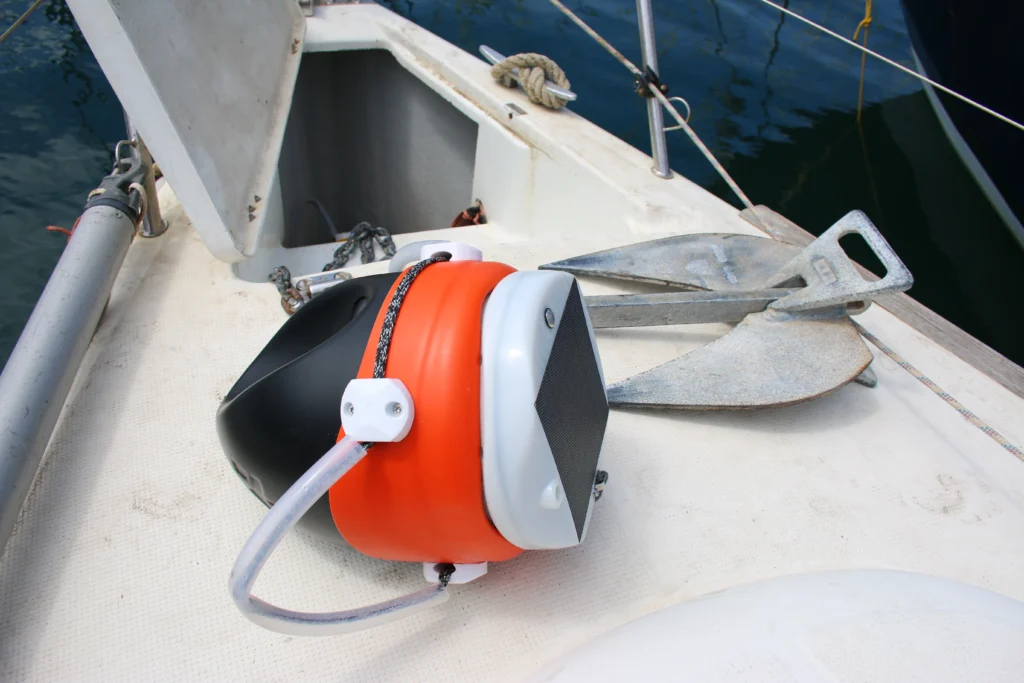
Morphéis– 24/7 Anchor Watch
What If The Anchor Does Not Reset?
Every reputable anchor manufacturer considers setting, holding and resetting behaviour. Modern anchors are engineered to perform in demanding conditions, but no manufacturer can control the exact seabed, the weather, your scope or what is lying beneath the anchor.
So the final layer of a complete anchoring system is not another claim that an anchor can never move. It is a reliable way to know when it actually does.
Morphéis takes a different approach from conventional phone and chartplotter alarms. Its GPS device sits above and monitors the anchor itself rather than trying to infer anchor performance from the movement of the boat.
That means the boat can swing normally after a wind change without creating the same radius-based uncertainty. If the anchor itself moves beyond the system’s tolerance, the dedicated onboard receiver alerts the crew.
Morphéis does not make an unsuitable anchorage safe, replace correct scope or guarantee that an anchor will hold. It provides the missing information when conditions change: whether the anchor beneath you is still where you left it.