
How Morphéis Works
A three-part system designed to monitor anchor position with precision, stability, and real-world reliability at anchor.
The Morphéis System
A simple three-component system working together
The Buoy
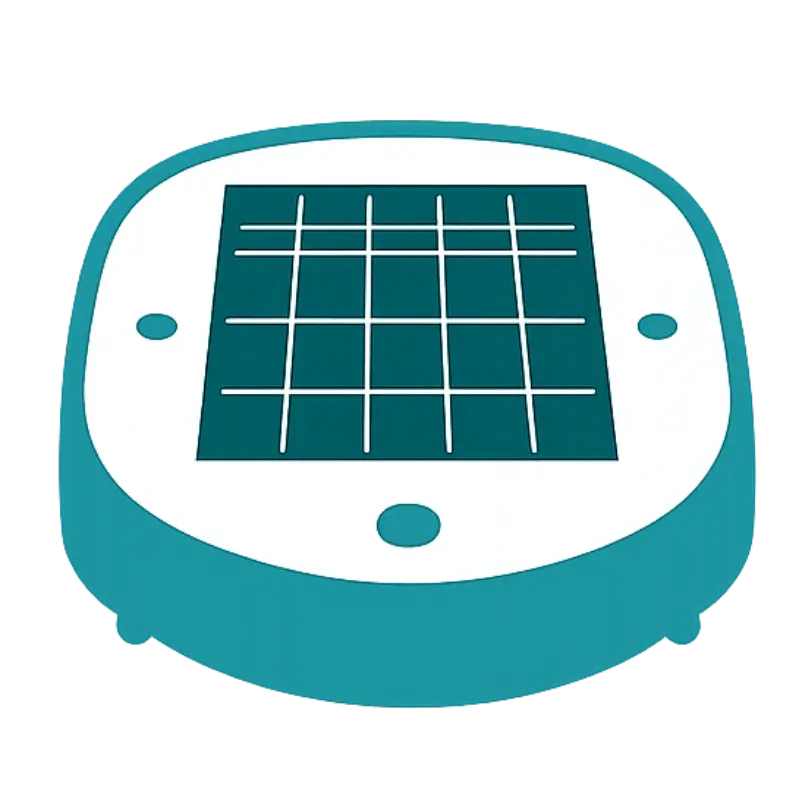
The brain
Ultra-precise GPS, solar-powered, and fully sealed (IP68).
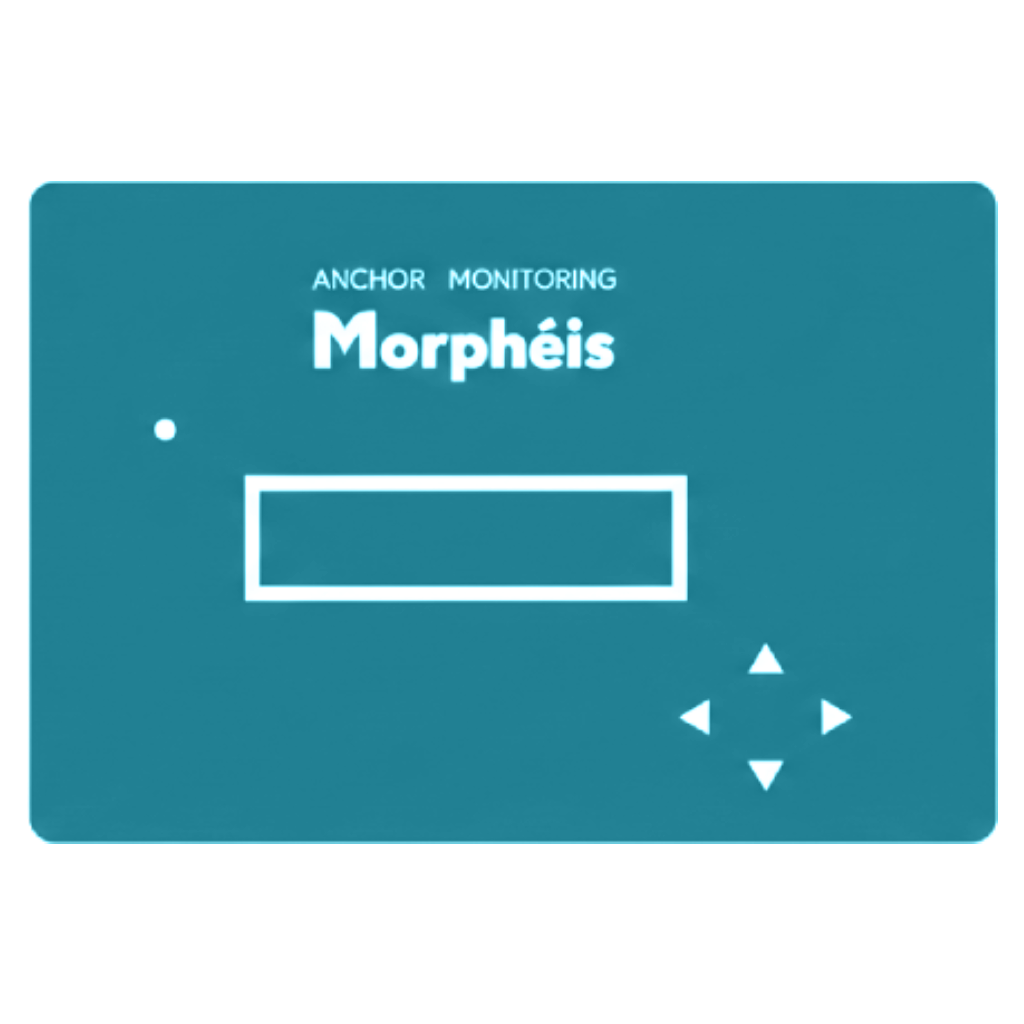
The Receiver
Visual alerts, audible alarms, and immediate SMS notifications.
System Components in Detail
The Physical Buoy
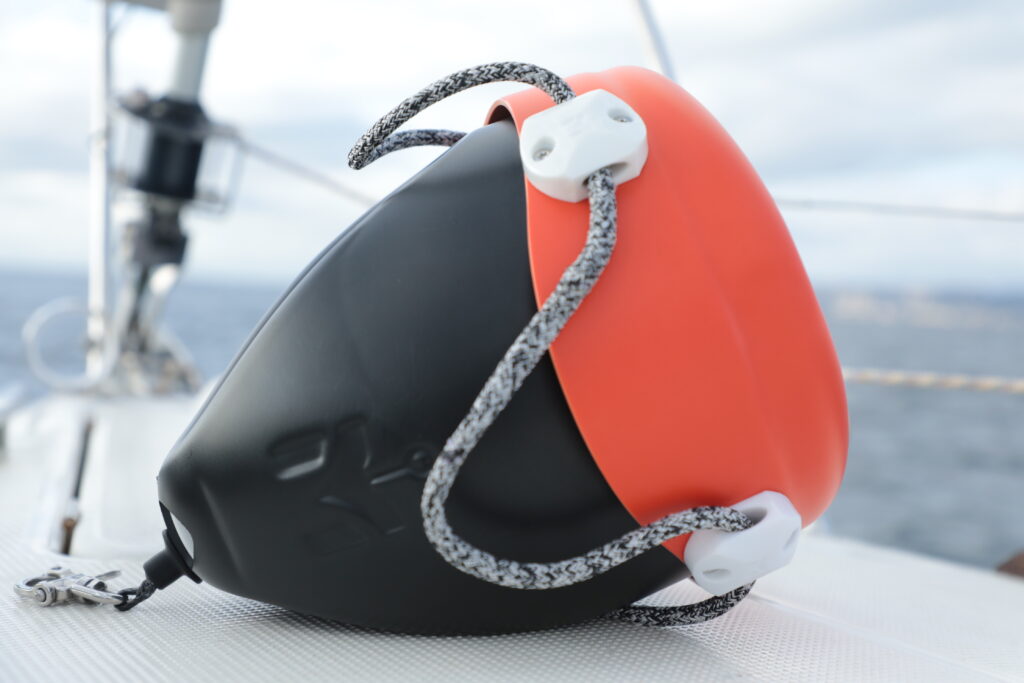
A stable, always-taut buoy that sits directly above your anchor.
Key Benefits
- Keeps the reference point fixed directly over the anchor
- Minimises lateral movement for more reliable monitoring
- Built for real anchoring, not ideal conditions
25 m Dyneema trip line, 3 mm (750 kg working load)
Moves less than 3m in 30 kts of wind
316-stainless hardware with swivel snap shackle
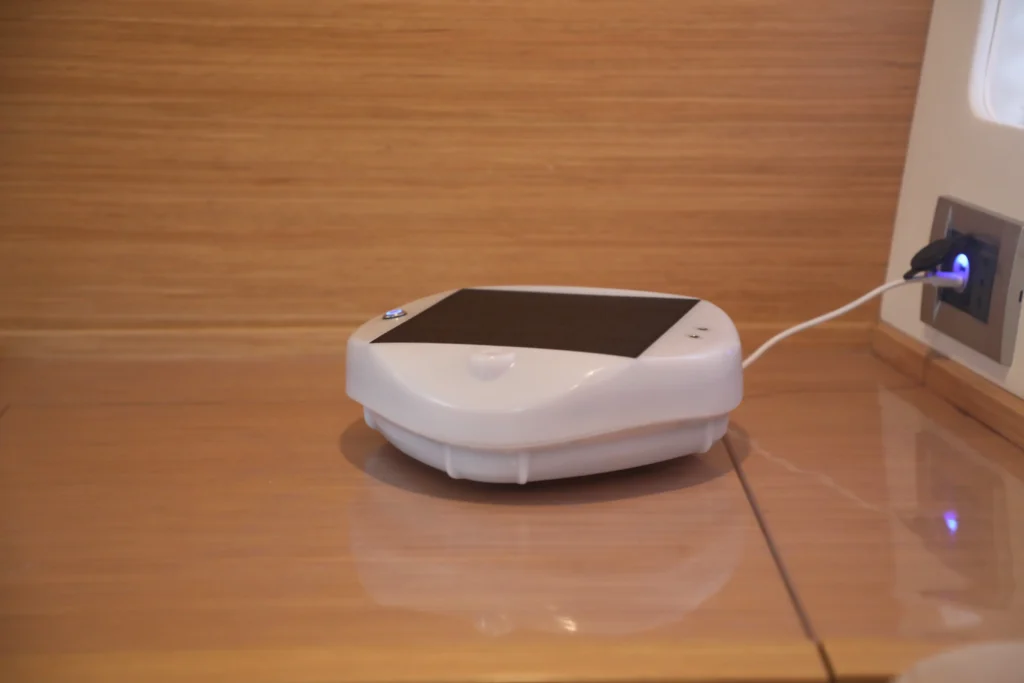
Electronics Enclosure
Key Benefits
- High-accuracy GPS positioned at the anchor, not the boat
- Solar-powered, low maintenance, built for constant exposure
- Highly visible at night for easy retrieval and safety
16 LEDs visible from 200 m (auto-on at night)
Onboard Receiver
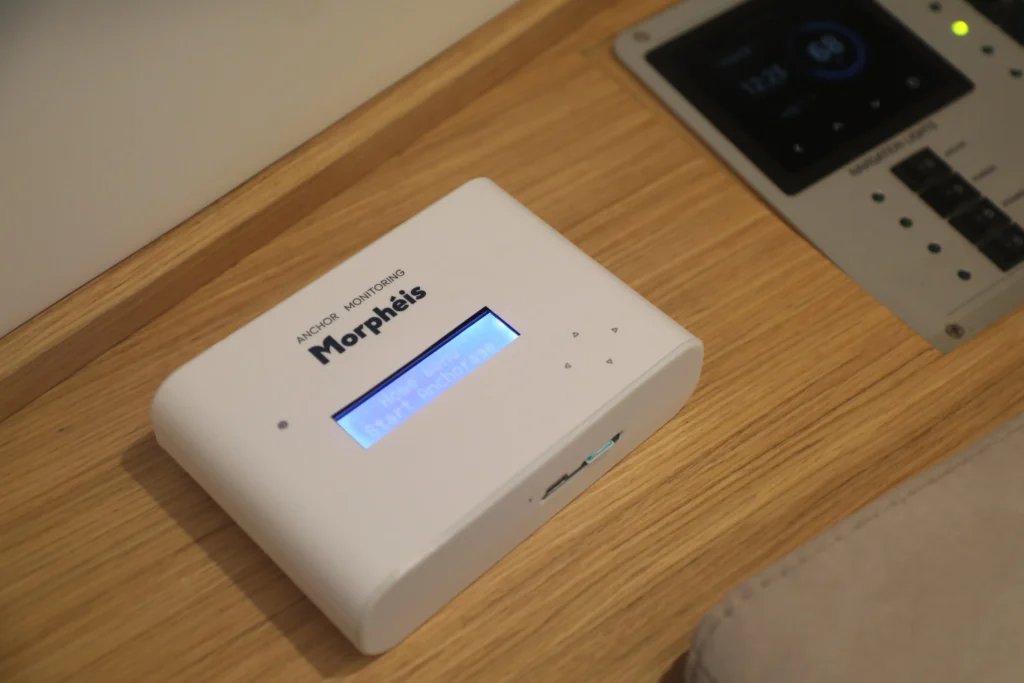
Key Benefits
- Instant visual status plus a 100 dB alarm
- Sends SMS alerts to 2 phones, anywhere in the world.
- Portable around the boat, no install required
48 h battery autonomy
Deploy
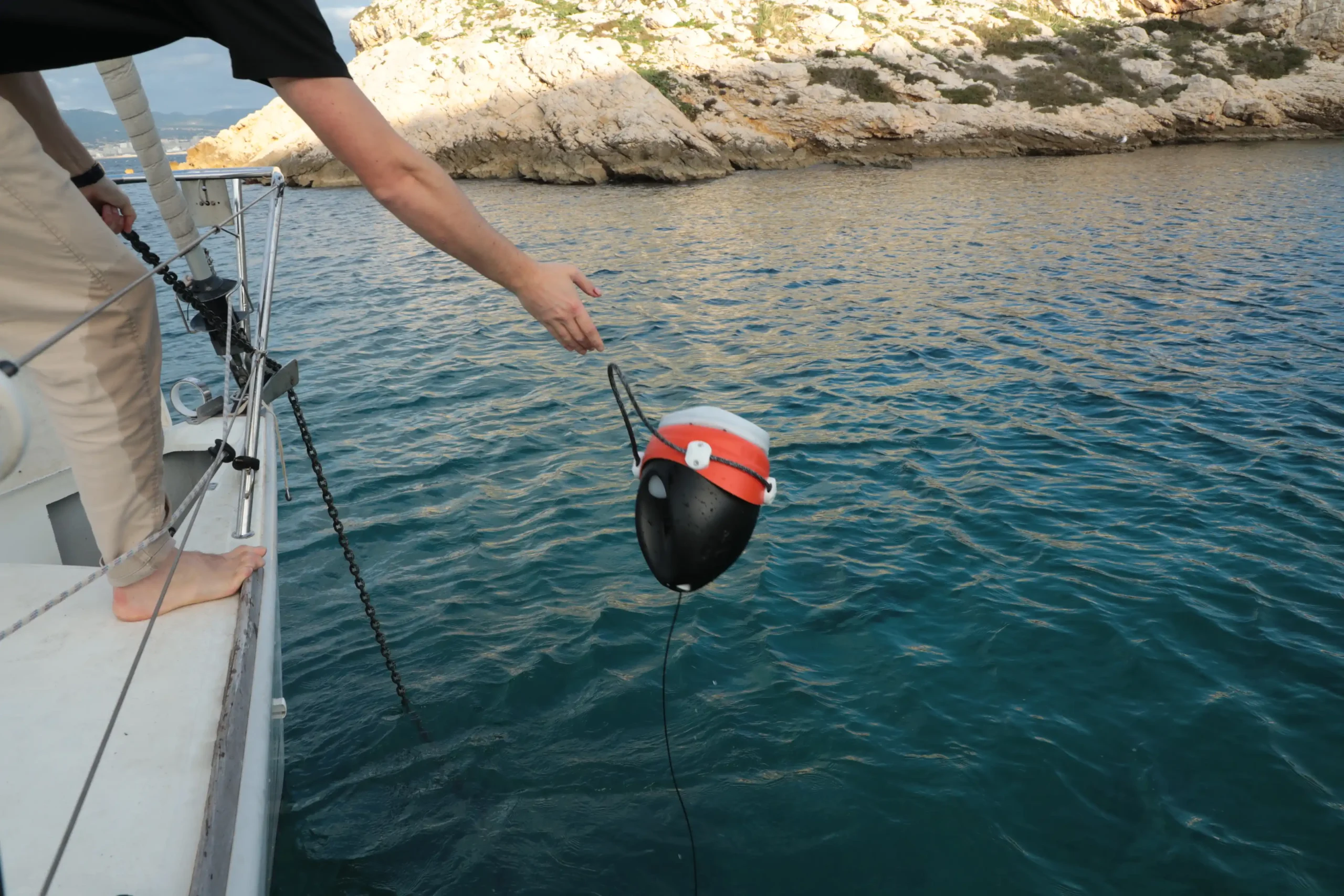
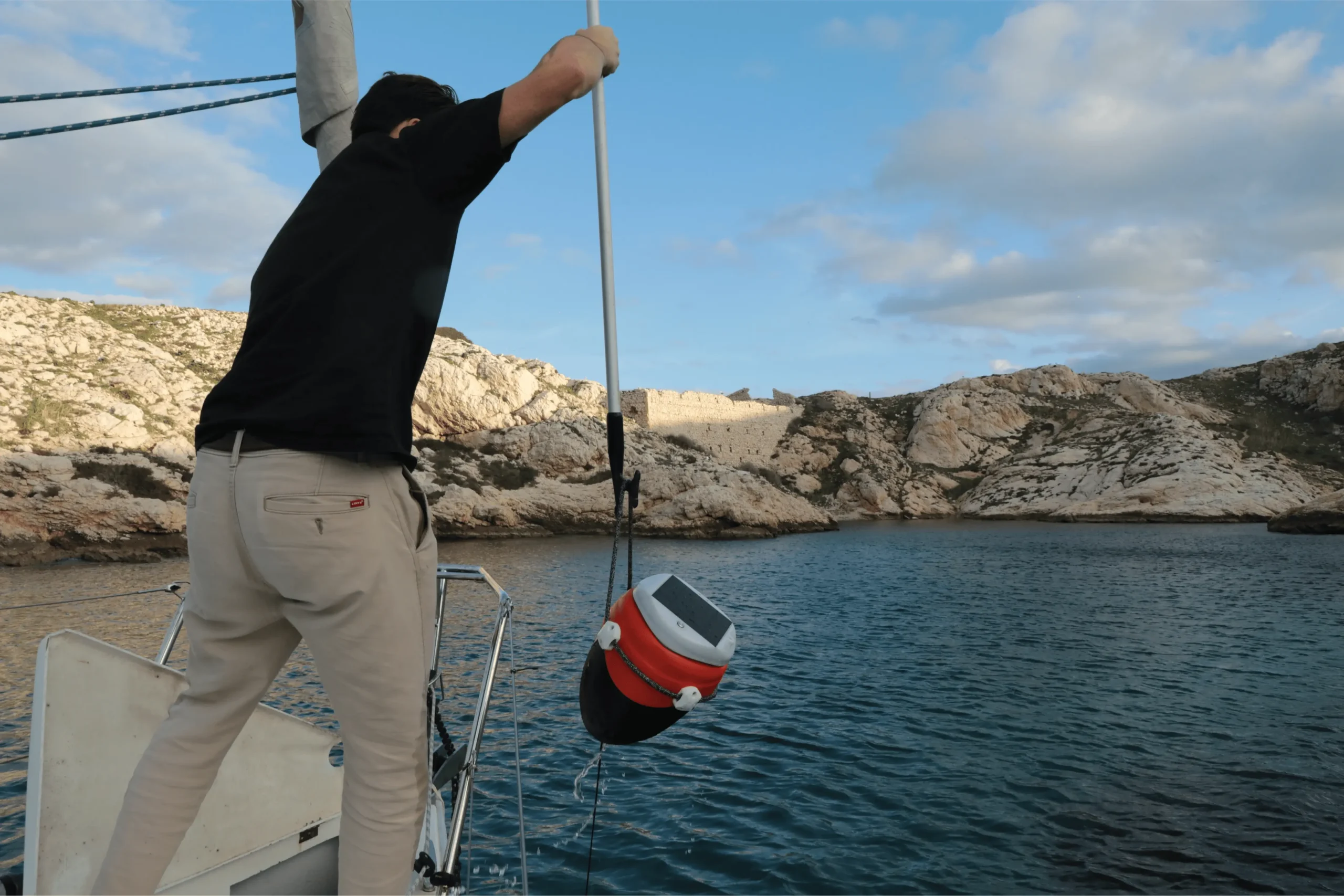
Attach, clip, and drop anchor and buoy together.
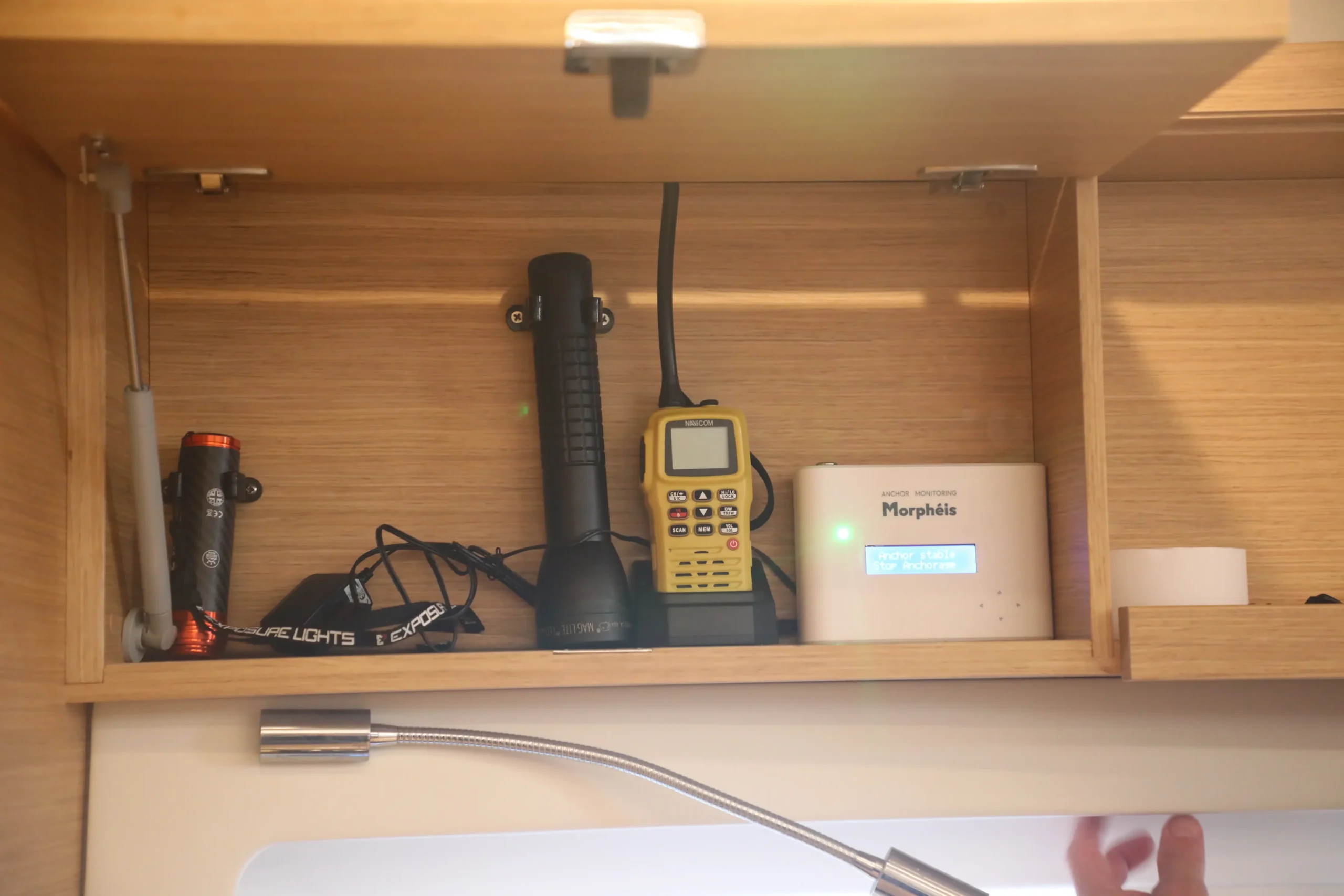
System Behaviour: Receiver enters Blue mode while the system watches for stabilisation.
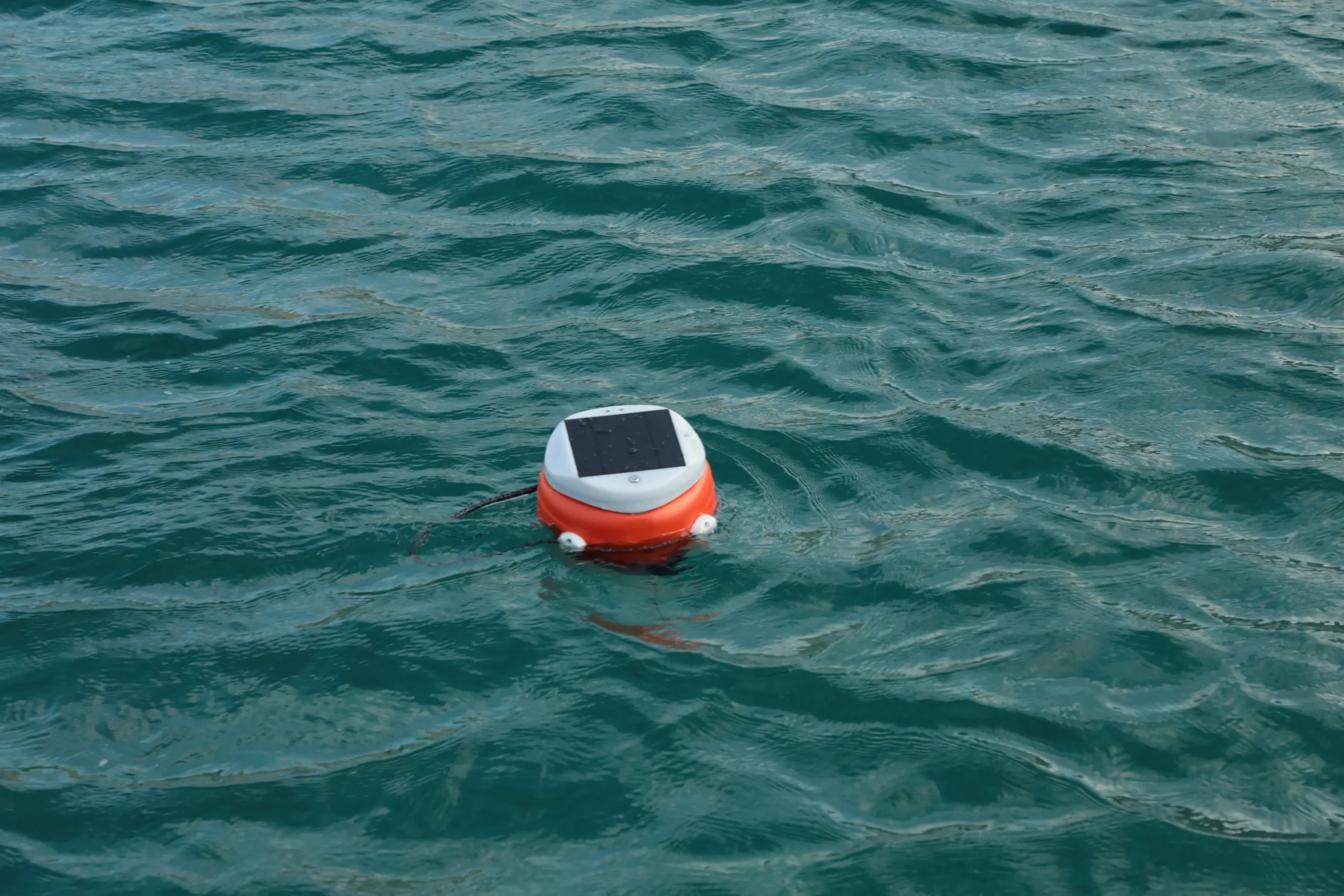
Stabilise
Morphéis automatically detects when the anchor has truly settled.
It analyses positional variance over time and locks a stable reference point. No manual "set anchor" guesswork required.
Monitor
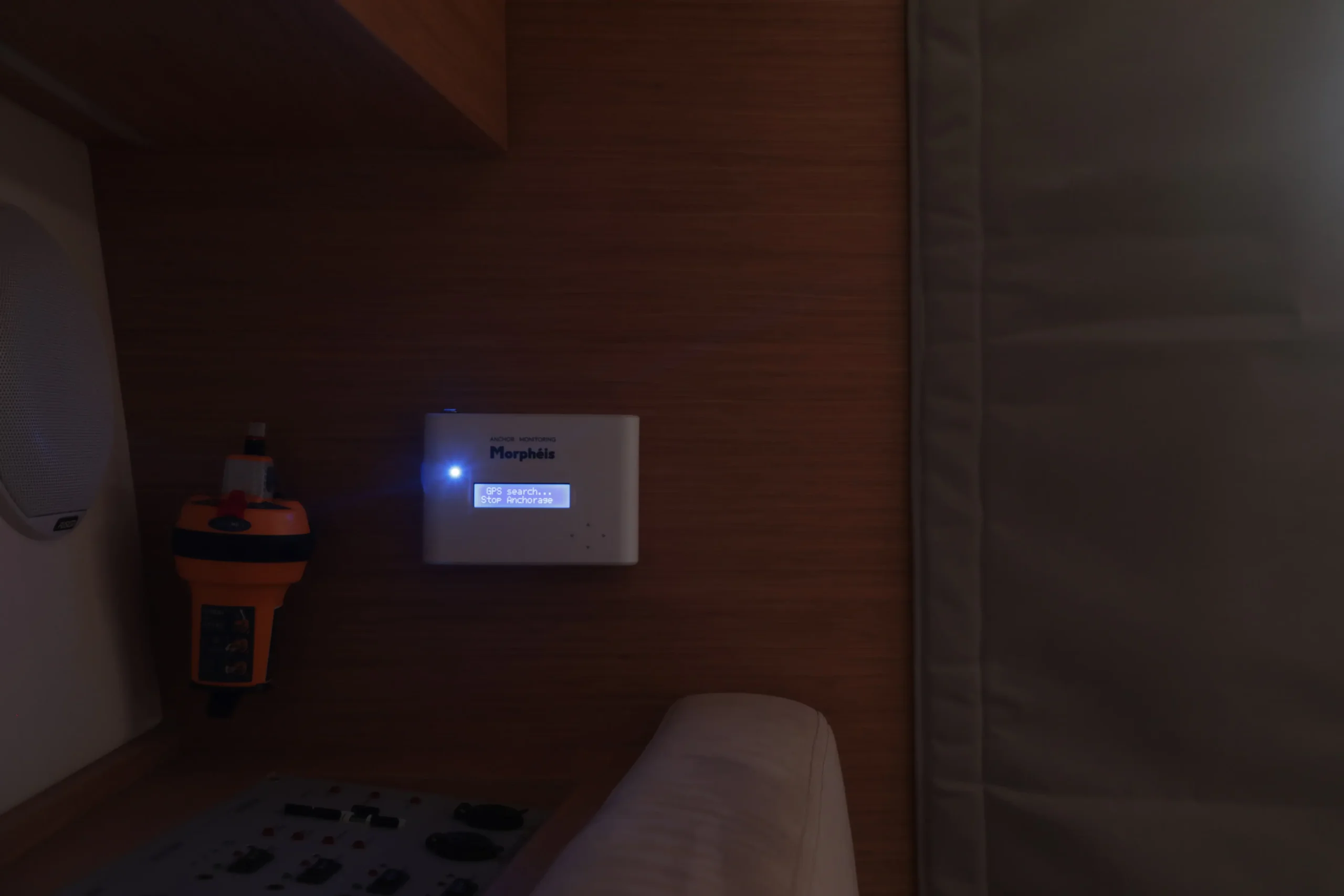
Continuous GPS tracking with smart filtering to ignore noise.
The buoy position is compared against your tolerance radius across multiple readings. Rec. setting: 5–8m.
Alert (Alarm + SMS)
When the anchor moves beyond your tolerance, you’re alerted fast.
Alerts trigger within 30–45s. SMS notifications sent for alerts and GPS recovery status.
Retrieve
Stop monitoring, lift anchor, and hook buoy by the top hoops.
Enclosure can be removed and charged separately without moving the buoy.
Engineered for precision.
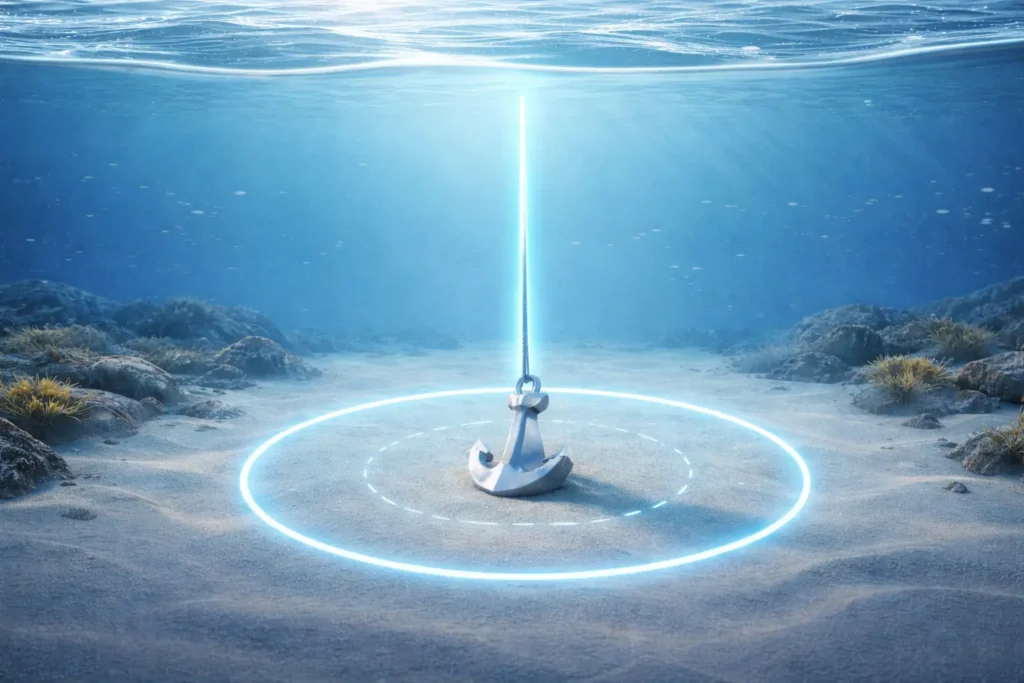
Anchor-Referenced Drag Detection
Position tracking is based on the anchor’s fixed location on the seabed, not vessel GPS position, eliminating false alerts caused by swing radius, wind shifts, or tidal movement.
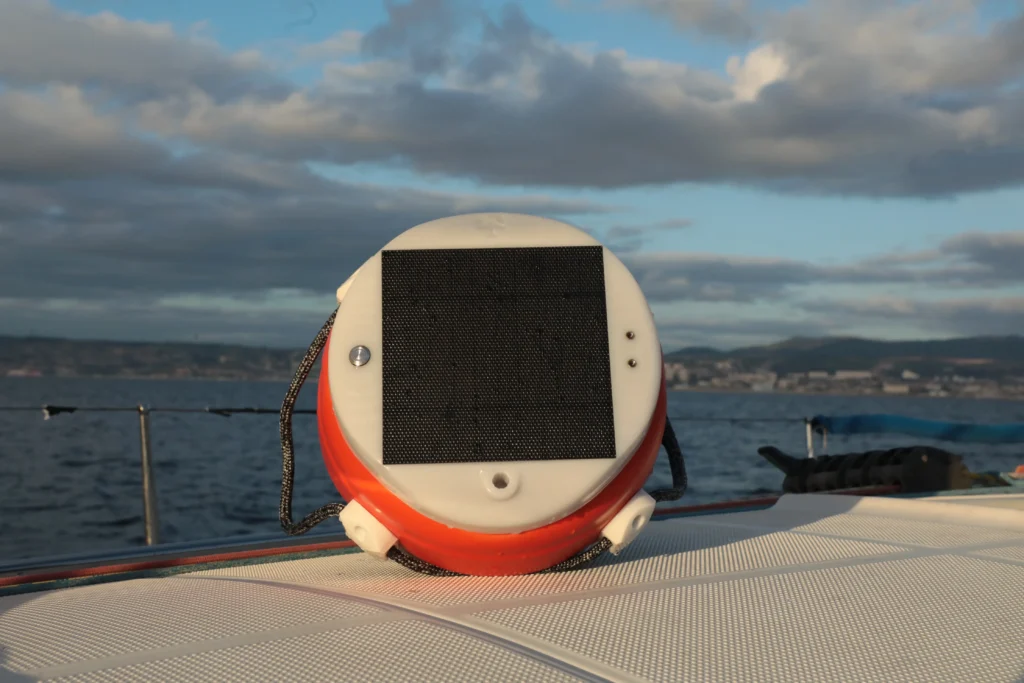
Hybrid Power Management System
A 5W solar panel maintains charge during daylight, while an internal Li-ion battery provides up to 72 hours of operation without sunlight, ensuring continuous monitoring.
Independent Radio Comms
The buoy communicates with the onboard receiver via radio, similar to marine VHF systems, providing reliable anchor monitoring without reliance on coverage or mobile data.
Removable Electronic Enclosure
The electronic housing detaches from the buoy, allowing indoor charging via induction when sunlight is unavailable, while the buoy itself remains connected to the anchor.
Automatically Tensioned Line
A permanently taut Dyneema line maintains the buoy directly above the anchor, creating a stable and repeatable reference point regardless of boat movement or changing conditions.
750 Kg Load-Rated Recovery Line
The Ø3 mm Dyneema line is rated to 750 kg. With a length of 25m, it enables manual recovery of a fouled anchor when required in most anchorages around the world..
| Feature / Behaviour | Morphéis | Phone Apps | Chartplotters |
|---|---|---|---|
| Designed specifically for anchor watching | general-purpose GPS | navigation tool | |
| Tracks the anchor itself | (tracks phone GPS) | (tracks boat GPS) | |
| Works with no mobile signal | |||
| Alert accuracy | Highverifies real movement | Low(GPS jitter & false alarms) | Medium(radius trade-off) |
| False alarms | Zero | Fairly constant depending on device | Frequent if radius small |
| Works with no phone/tablet | |||
| Power source | Solar + 72h backup | Phone battery | Boat 12V |
| Night visibility at anchor | 16-LED automatic light | ||
| Setup simplicity | ON → Clip → Drop → Start | Guess where anchor is + set scope | Guess where anchor is + set scope |
| Runs all night without draining boat battery | |||
| Offline alarms | |||
| Remote alerts (ashore) | SMS | Requires multiple devices (premium) |
Built in France. Engineered for Real Life.
Morphéis is assembled and quality-tested in France using components from trusted suppliers.
Each unit undergoes a full accuracy and watertightness test before leaving our facility.
The buoy body is produced from reclaimed HDPE, reducing manufacturing waste while maintaining marine-grade strength.
Onboard Monitoring and Alerts
Real-time anchor status on board, with automatic alerts when you’re away from the boat.
Portable Onboard Receiver Unit
The receiver continuously monitors the buoy via a 100 m radio link, providing real-time anchor status through visual and audible alerts, without requiring permanent installation on the boat.
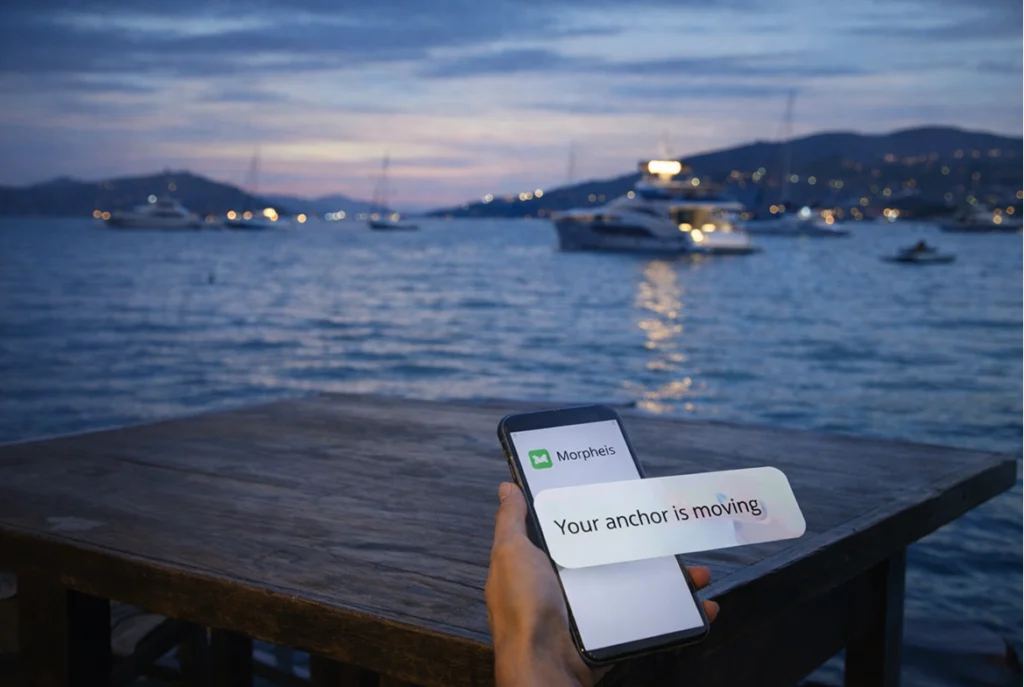
Global SMS Alert Notifications
When anchor drag is detected, the system sends SMS alerts to up to two phone numbers worldwide and automatically notifies you again once the anchor is secure.
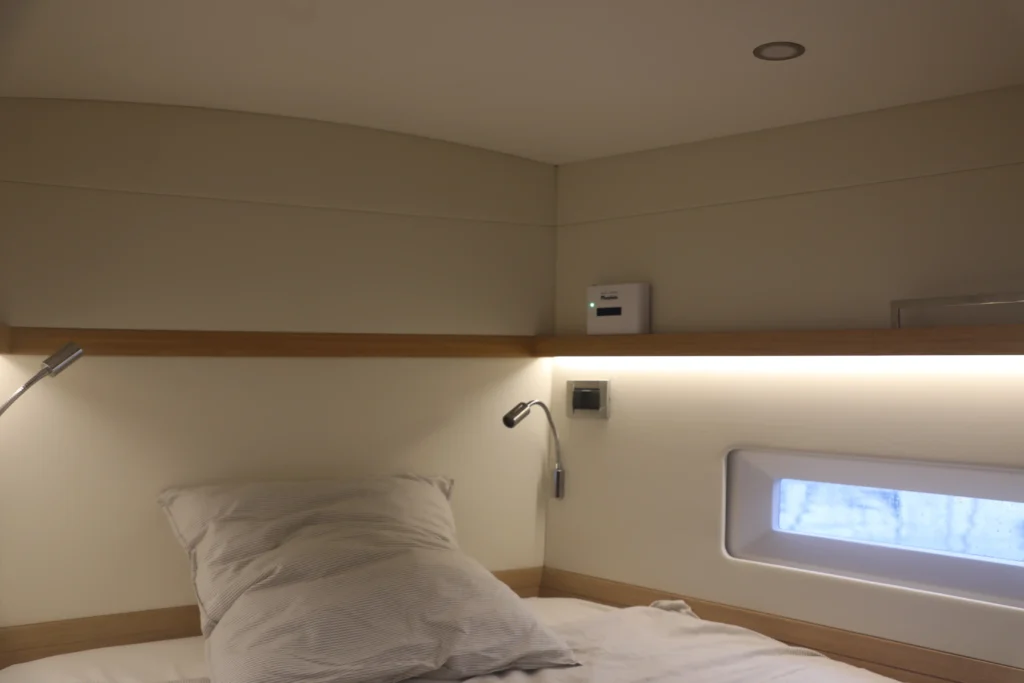
An Alarm You will Hear Anywhere
A 100 dB audible alarm is designed to be heard throughout the boat and to wake you immediately if anchor drag is detected while you’re asleep. No more restless nights wondering if you are safe.cccc
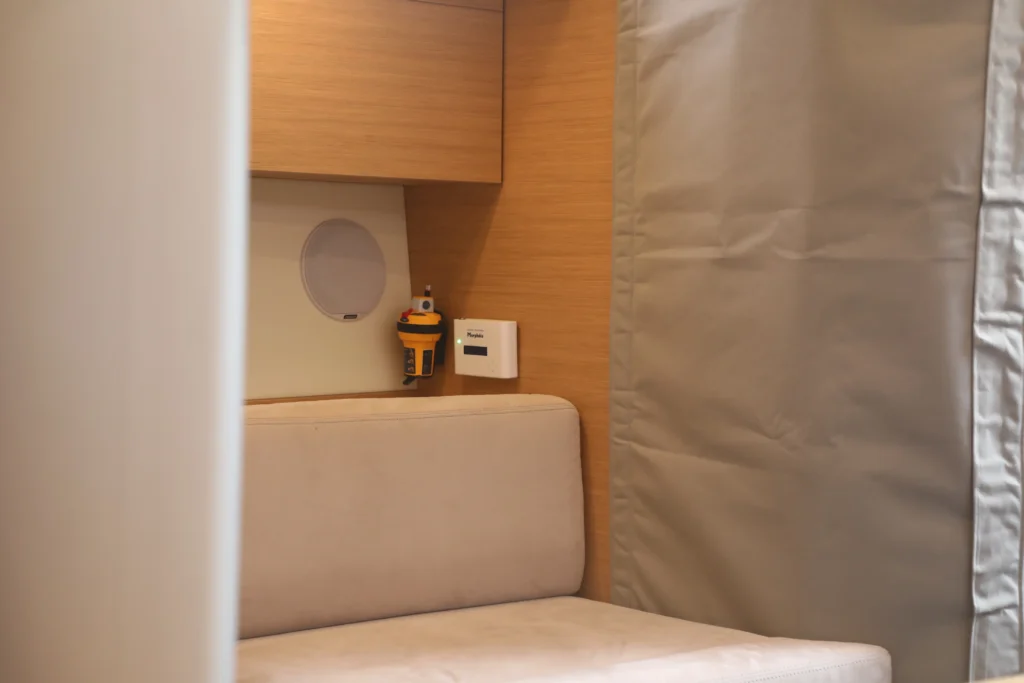
Place It Anywhere
Fully portable by design, the receiver can be placed on deck, at the chart table, or beside your bed at night, ensuring anchor alerts are always within reach. It can also be mounted in a specific place if you prefer.acv
Charging, when you need it.
Morphéis is designed to be self-sufficient by the sun. But, if you experience long periods without sun, charging is easy.
Both the receiver, and the electronic enclosure can charge wirelessly with the included charging cradle. It securely attaches, and can charge via AC or DC systems.
Technical FAQs
How does Morphéis determine when the anchor is actually “set”?
Morpheis is built for anyone who anchors – from first-time cruisers to liveaboards who spend months offshore. Even the most experienced sailors admit that when weather turns or squalls roll in, nobody sleeps properly. Morpheis removes that uncertainty by giving you a precise, independent anchor watch that doesn’t rely on guesswork or boat movement.
How Morphéis determines the "Set"
When you drop anchor, there’s a natural settling phase: the anchor digs in, the chain straightens, the boat falls back, and the buoy shifts as everything finds equilibrium. If you mark “anchor set” too early (as you do with most phone apps or plotter alarms), your reference point may still be moving, which is one of the main causes of nuisance alerts and sloppy detection.
Morphéis avoids this entirely by using a movement-based stabilisation algorithm. After you select Start anchor monitoring, the buoy begins collecting a stream of GPS fixes. Instead of treating the first valid fix as “truth”, it looks at how those positions evolve over a window of time. While the anchor is still bedding in, the buoy’s position will show a directional drift pattern and relatively high variance. Once drag stops and the system is only seeing minor oscillations around a single point, variance drops and the data cluster tightens.
At that point, Morphéis transitions from a “settling” state into a “stable baseline” state. The receiver LED flips from blue to green automatically, with no button press and no calibration step from the user. That stable baseline is then used as the reference for all future drag detection.
What is the real GPS accuracy of Morphéis, and how do you achieve 4 m drag detection?
GPS Accuracy & 4m Detection
Most “anchor alarms” are fundamentally limited by geometry. The GPS receiver is on the boat, which can easily move tens of metres around the anchor in a normal swing circle. That means the software has to let you set a very large radius to avoid false alarms, which instantly reduces its sensitivity to genuine drag.
Morphéis takes a different approach: it places the GPS receiver directly above the anchor, on a dedicated mechanical buoy with very low swing. In internal testing, this buoy typically moves no more than 3 m in 30 knots of wind, so the GPS track is a tight cluster of points rather than a huge circle. Because the physical motion is so constrained, the system can safely work with a much smaller tolerance radius.
On top of that, the GPS data is smoothed and sanity-checked. Instead of reacting to a single noisy position, Morphéis looks at multiple successive fixes, averages them, and filters out obvious spikes. When the centre of that cluster shifts beyond the chosen tolerance (for example, 5–8 m), and stays there consistently, the system classifies it as true anchor movement rather than noise. That combination of physical stability + conservative software logic is what enables reliable ≈4 m drag detection in real conditions.
How quickly does Morphéis alert me if my anchor starts to drag?
Alert Timing & Logic
Alert speed for any anchor monitoring system is a trade-off between responsiveness and false alarm resistance. If you triggered an alarm on the very first GPS fix that looks “wrong”, you’d be getting woken up constantly by single bad readings, reflections from nearby cliffs, or short-lived gusts that momentarily move the buoy.
Morphéis deliberately avoids this. Once the anchor is marked as “stable”, the system keeps sampling GPS positions from the buoy and comparing them with the baseline and your set tolerance radius. If one sample pops just outside the radius but the next few return to normal, that’s treated as noise. If, however, multiple consecutive samples show the buoy moving in a consistent direction away from the baseline, and the centre of the position cluster sits beyond your tolerance, the software considers this progressive displacement and triggers a drag event.
The internal timing is tuned so that in most real scenarios you get alerted in well under a minute, but only when the movement pattern really looks like the anchor has started to slip - not when the boat is simply reacting to a single gust or wave. That’s how Morphéis manages to be both fast and trustworthy, instead of forcing you to choose between speed and sanity.
What happens if GPS signal or radio communication is lost?
Signal & Communication Loss
From a safety perspective, “no data” is important data. If the buoy can’t see enough satellites for a reliable fix, or if the onboard receiver stops getting valid information from the buoy, the system has no way of confirming your anchor status. It would be irresponsible to stay silent in that case, so Morphéis escalates.
The buoy and receiver communicate over a dedicated radio link designed for marine use, independent of mobile networks. The receiver expects to hear from the buoy at regular intervals. If several expected messages are missed, the receiver moves into a “no radio data” or “no GPS data” state, depending on what has failed. At that point it will: Raise a visible and audible warning on the receiver, and trigger an SMS to the stored phone numbers explaining which data source has been lost.
To avoid spamming you, Morphéis sends two SMS messages per incident: one when the problem occurs, and one when normal operation resumes (for example, “GPS signal restored, monitoring resumed”). This dual-message pattern gives you both the initial warning and the all-clear, so you know whether the system is currently blind or fully watching your anchor again.
How does the buoy behave in strong winds, swell, and tide - does it swing a lot?
Environmental Stability
For precise anchor monitoring, you actually want the buoy to behave with the opposite characteristics of the boat. While the vessel is free to swing, yaw, and surge around the chain, the buoy’s job is to sit almost directly above the anchor with as little lateral excursion as possible.
Morphéis uses a combination of shape, mass, and tether design to achieve this. The buoy is sufficiently weighted to resist being thrown around by chop, but not so heavy that it overloads the Dyneema line or disturbs the anchor. Its geometry presents a relatively low side area to the water and wind, which helps it track the line of pull rather than skittering across the surface. The 3 mm Dyneema trip line, with its very low stretch and 750 kg working load, stays taut and transmits force cleanly back to the anchor.
In waves and swell, the buoy primarily moves vertically, with only modest sideways drift. In reversing tides, the buoy will naturally realign with the new flow direction, but because it is so close to the anchor, the actual displacement of the GPS point is very small. All of this means the GPS track looks like a tight cluster with minor jitter, not a huge circle. That stability is what allows Morphéis to use relatively tight tolerance radii without flirting with false alarms every time the weather changes.
Does Morphéis require any calibration or manual setup before each use?
Calibration-Free Operation
Many technical products fail in real life because they rely on users correctly calibrating them under less-than-ideal conditions. On a moving boat, in bad light or bad weather, anything that demands fine input is likely to be done incorrectly, skipped, or forgotten entirely. The result is poor performance and eroded trust.
Morphéis removes this by making the system responsible for its own reference frame. Instead of asking you to mark “anchor set” at precisely the right moment or define complex zones, it runs a self-driven stabilisation routine after you hit Start anchor monitoring. That routine looks at the spread and behaviour of GPS positions over a defined period, classifying the pattern as “still settling” or “stable”. Only once stability is detected does Morphéis lock in the baseline.
From the owner’s point of view, there are only two things to change: Phone numbers (up to two, e.g. skipper and co-skipper, or owner and charter base), and Tolerance radius (with a recommended 5–8 m for most normal cruising setups). Everything else - from drift modelling to false alarm prevention - happens inside the buoy and receiver. That design philosophy is deliberate: high technical sophistication, zero calibration burden.
How strong is the Dyneema line and can it really help lift a fouled anchor?
Dyneema Strength & Recovery
Dyneema (UHMWPE fibre) is widely used in high-performance sailing, industrial lifting and safety gear because of its very high tensile strength, low stretch, and excellent fatigue resistance. At just 3 mm, the Dyneema line on Morphéis has a working load far beyond what would be required merely to mark the anchor position as an orin. The quoted ~750 kg working load and 1.5 tonne breaking load means that, within sensible limits, it can be used to apply lifting or back-pulling force to an anchor that has wedged under rock or structure.
The swivel snap hook at the anchor end serves two roles: it prevents the line from twisting around the chain as the boat swings, and it ensures loads are applied more cleanly along the axis of the line rather than through tight bends, which protects the fibre from premature wear. Compared to typical floating polypropylene lines used for cheap anchor buoys, Dyneema is far less prone to UV degradation, creep and sudden failure.
Practically, you would still treat it with respect: avoid shock-loading the line, use your windlass or winch to apply load gradually, and remember that the primary goal of Morphéis is anchor monitoring. The built-in strength is a significant bonus that allows it to double as a serious, reliable trip line when things go seriously wrong.
How does Morphéis cope with tide changes, current, and wave action without generating false alarms?
Tide & Wave Compensation
Tides and currents can create complex motion around the anchor. As the tide turns or a strong cross-current develops, the hull will often track a wide arc, change heading, and experience varying chain tensions. A boat-based alarm sees all of this as significant positional change, which is why those systems rely on big, conservative radii and still end up triggering at awkward times.
Because Morphéis is physically much closer to the anchor, the amplitude of that motion is dramatically reduced. The buoy still reacts to the environment - especially in strong cross-tides or confused seas - but the absolute movement is only a few metres, not dozens. On top of that, Morphéis doesn’t judge on raw distance alone. It monitors: Direction of movement (is it oscillation or clear translation?), Persistence (do multiple samples agree?), and Relationship to baseline (does the movement centre keep returning to the same cluster?).
A typical tide change may cause the buoy to drift in a curve and then re-stabilise around essentially the same anchor holding point. A true drag event tends to show sustained movement in a consistent direction, with the position cluster migrating away from the original baseline. Morphéis is tuned to recognise that difference and only classifies the latter as drag, which is how it maintains zero false alarms in controlled internal tests while still reacting quickly when the anchor actually starts to move.
What happens if the batteries run low - will Morphéis just switch off silently?
Proactive Power Management
Long-term trust in any safety system hinges on predictable failure modes. A device that quietly dies overnight when the battery runs out is worse than useless; it actively gives a false sense of security. Morphéis addresses this with proactive battery management.
The buoy enclosure contains a Li-ion battery and a 5 W solar panel mounted on top. In typical conditions, just a couple of hours of daylight will replenish enough energy to run through the whole night, which is why Morphéis quotes 72 h autonomy without sunlight and “infinite” autonomy with normal solar exposure. The onboard firmware monitors charge state and flags low-battery long before the system reaches a hard cut-off.
The receiver’s Li-Po battery is sized for around 48 h of autonomy and can be charged either by induction (drop-in cradle) or USB-C. Again, the receiver tracks its own battery level and treats a critical charge state as a fault to be communicated, not a minor detail to be hidden. When a threshold is crossed, Morphéis will send an SMS indicating that the buoy or receiver battery is low, giving you time to bring the enclosure into better sunlight, place it on the induction charger, or plug in the receiver.
In short: you’re never left guessing whether the system is powered; if there is a power-related risk to monitoring, Morphéis will tell you.
How does the 5W solar panel keep the buoy powered continuously, and is it really enough?
Solar Efficiency & Autonomy
The buoy’s electronics enclosure is designed around extremely low continuous power consumption. Its GPS module, radio transmitter, and microcontroller are optimised for intermittent duty cycles - meaning they only run at full draw during sampling and communication bursts, and idle in ultra-low-power modes between cycles. Over a 24-hour period, the enclosure’s average energy requirement is relatively small.
A 5 W solar panel, under realistic conditions, produces approximately: 30–40 Wh/day in Mediterranean summer, 15–25 Wh/day in shoulder seasons, and 20–30 Wh/day in Northern Europe. Therefore, in the Med in July, the solar panel routinely provides 3–5× more energy than the buoy actually needs. Even on partially overcast days, the panel still generates surplus.
On typical summer cruising days, the system only needs ~2 hours of sunlight to completely recharge the energy used overnight. This ultra-high solar surplus is why Morphéis is effectively self-sustaining in real usage, and why total autonomy is listed as “infinite with sunlight”. The solar sizing is intentionally oversized relative to consumption to preserve battery life and ensure stability even during two or three consecutive cloudy days.
What happens if there isn’t enough sunlight to power the buoy?
Morphéis can run for around 72 hours with no sunlight at all. If conditions stay poor for longer than that, the buoy can be topped up via the included induction charger. The system is designed so it never silently dies – you always receive battery alerts well before power becomes critical.
Autonomy Without Sun
Solar power gives Morphéis effectively unlimited autonomy in normal cruising conditions, but the system is purposely engineered to remain fully operational even during extended periods of poor weather. The buoy enclosure contains a high-quality Li-ion battery sized to provide around 72 hours of runtime without receiving a single watt of sunlight. This means that three consecutive days of heavy overcast - uncommon everywhere - would still leave ample operating margin.
If the weather remains unusually dark for longer, the buoy’s battery management system (BMS) continuously monitors charge levels and will send a low-battery SMS alert long before the situation becomes critical. This ensures you are never relying on a system that is quietly running out of power.
When sunlight simply isn’t available, the enclosure can be recharged using the induction charger supplied in the pack. Inductive charging is used deliberately for reliability: it allows the enclosure to remain fully sealed (maintaining its IP68 rating) without vulnerable ports, gaskets or USB flaps that inevitably degrade in marine environments. Charging is as simple as placing the enclosure on the cradle - no connectors, no alignment issues, and no risk of corrosion.
A single full induction charge brings the buoy back to its maximum autonomy window. In practical cruising, this means the system is not dependent on daily sunshine; it is capable of working indefinitely with solar alone, but also fully resilient during prolonged storms, cloudy passages, early-season northern cruising, or shaded anchorages.
How do I charge the buoy itsellf? Do I need to lift anchor?
Modular Recharging Design
Morphéis is intentionally designed as a modular two-part system: The mechanical buoy, which is the normal buoy that we expect to see above the anchor; and the electronic enclosure, which houses the GPS, radio, LEDs, and battery. These components are mechanically independent. The buoy remains tethered to the anchor 100% of the time, while the enclosure attaches via four embedded magnets and is safeguarded by a soft shackle. This design allows the enclosure to be removed in one motion, even from a dinghy or SUP, without disturbing the anchor or the Dyneema trip line.
This architecture solves a major operational challenge: long-term anchoring. On many cruising boats - especially those spending several days at anchor - pulling up the anchor chain simply to charge a device would be impractical and unsafe. With Morphéis, you leave the buoy exactly where it needs to be while you take the enclosure onboard for charging via induction. The buoy continues to mark the anchor position.
Reattaching is equally simple: once charged, you dinghy back to the buoy, hold the enclosure close, and the magnets snap it back into perfect alignment. The soft shackle prevents accidental loss, ensures rotational stability, and guarantees that reinstallation takes seconds, not minutes. This modular separation dramatically reduces friction during multi-day anchoring and ensures the system remains usable and maintainable without compromising the anchor’s position.
How is the receiver powered, and what is its real-world charging behaviour during cruising?
Receiver Power & Compatibility
The onboard receiver uses a Li-Po battery engineered for medium duty cycles. Unlike the buoy, which is designed for continuous operation, the receiver is designed for flexible placement - helm, cockpit, chart table, bedside - without relying on fixed wiring. This ensures you can always keep the alarm where you can hear it.
A full charge gives approximately 48 hours of active monitoring, though in practice most users top it up during that time. The receiver supports two charging modes: a magnetic induction cradle (drop-in convenience), and standard USB-C for universal compatibility. This dual-input design ensures the device can be charged almost anywhere, from AC, or DC systems.
The internal battery management system prevents overcharging and manages thermal conditions during fast top-up cycles. In real-world cruising, the receiver is usually charged constantly in a fixed location (if you choose to), or when it’s convenient.
Still Have Questions?
If you’d like to understand any component or behaviour in more detail, we’d be happy to help.
Full Technical Specification
Detailed mechanical, electronic, and manufacturing specifications for those who want to go deeper into how Morpheis is designed and built.
The Buoy
The mechanical buoy sits directly above the anchor via an automatically tensioned line. It also allows manual recovery of a fouled anchor if required. The buoy contains no electronic components, allowing it to be stored permanently in the anchor locker without risk of corrosion or battery degradation.
31 cm
25 cm
5 kg
25 m
Ø3 mm Dyneema
750 kg
Max 3 m in 30 knots of wind
Ø18 mm
Marine-grade stainless steel
Premium reused HDPE sourced from reclaimed manufacturing offcuts
Stainless steel swivel snap hook to prevent line twisting
Two integrated hoops for easy pickup with a boat hook
Electrical Enclosure
The waterproof unit is the brain of your Morphéis Anchor sentinel, housing advanced electronics to detect anchor drift, along with a long-lasting battery and integrated solar panel for continuous protection.
100m
– Induction charger (included)
– Solar panel above the enclosure
5W = charges in 2 hours what Morphéis needs for a whole night
Boat Receiver
The onboard unit lets you instantly know if your anchor is secure. It alerts you immediately in case of any drift, with a 24/7 status LED keeping you informed in real time about your mooring.
100 dB
15cm