

€1,500 is a substantial amount of money for an anchor alarm.
It is vastly more than a free phone app. It could buy other useful equipment, contribute towards a new anchor and chain, or pay for a number of nights in a marina.
So is a dedicated anchor-monitoring system such as Morphéis worth it?
The honest answer is that it depends on the boat and how it is used.
For an owner with a €10,000 day boat who anchors for lunch six times a year, spending €1,500 would be very difficult to justify. For someone protecting a €500,000 yacht while spending weeks at anchor, the same purchase represents only 0.3% of the boat’s value.
Boat value is not the whole calculation. A €60,000 yacht might also be its owner’s full-time home. If that owner anchors 200 nights a year, dependable monitoring may be more valuable to them than it is to the owner of a million-euro yacht that never leaves a marina.
This guide considers the decision through five practical questions:
- What percentage of the boat’s value does the system represent?
- How many nights will it actually be used?
- What would the alternatives cost?
- What are the consequences of detecting movement too late?
- Is the rest of the anchoring system already good enough to justify adding monitoring?
The short answer
A €1,500 anchor-monitoring system is more likely to be worth it if:
- the boat is worth several hundred thousand euros;
- the boat is your home, regardless of its market value;
- you anchor frequently or for long periods;
- you routinely sleep aboard at anchor;
- you leave the boat while it is anchored;
- you cruise remotely or avoid marinas for much of the year;
- you no longer trust alarms based on the boat’s swinging position;
- a late warning could expose the boat to a shoreline, shallow water or neighbouring vessels.
It is less likely to be worth it if:
- you own a low-value boat used occasionally;
- you mainly make short daytime stops in settled weather;
- the boat spends nearly every night in a marina;
- you charter rather than own;
- a free app already meets your needs reliably;
- more fundamental equipment—such as the anchor, chain, rode or safety gear—still needs upgrading first.
Premium monitoring should be the final layer of a sound anchoring system, not an expensive attempt to compensate for weak ground tackle or poor technique.
What does €1,500 represent relative to the boat?
The same purchase can be extravagant or proportionate depending on the asset it protects.
| Approximate boat value | €1,500 as a percentage of value | Initial financial perspective |
|---|---|---|
| €10,000 | 15% | Very difficult to justify for occasional recreational use |
| €30,000 | 5% | Significant; depends heavily on lifestyle and anchoring frequency |
| €60,000 | 2.5% | Still substantial, but potentially reasonable for a full-time liveaboard |
| €100,000 | 1.5% | Could be proportionate for a frequent cruiser |
| €300,000 | 0.5% | A relatively small addition to a high-value cruising boat |
| €500,000 | 0.3% | Increasingly easy to justify if the boat anchors regularly |
| €750,000 | 0.2% | A small percentage of the vessel’s value |
| €1,000,000 | 0.15% | Minor relative to the capital value, although use still matters |
These percentages do not prove that someone should buy the system. A €1 million marina-based yacht may gain little from it, while a €60,000 liveaboard may depend on it nightly.
They do show why describing €1,500 as simply “expensive” lacks context.
Owners already spend on equipment intended to protect the vessel and crew: anchors, chain, windlasses, bilge alarms, AIS, chartplotters, life rafts, communications and security systems. Anchor monitoring should be judged within that wider safety and ownership budget.
It is risk-management equipment – not an insurance policy
Premium monitoring is sometimes described as an insurance policy. The comparison is understandable, but it should not be taken literally.
An insurance policy transfers defined financial risks to an insurer and may compensate the owner after a covered loss. An anchor-monitoring system does neither. It cannot prevent every incident and it does not pay for damage.
It is better understood as risk-management equipment.
Its purpose is to give the crew information early enough to act if the anchor begins moving. That may allow someone to start the engine, reduce load on the anchor, wake the crew, return from shore or re-anchor before the situation becomes more serious.
Its value therefore lies in detection time and confidence—not in guaranteeing that the anchor will never drag.
No anchor or alarm can make an unsuitable location safe. Avoiding common anchoring mistakes remains more important than adding electronics. Our guide to what happens when the wind changes direction at anchor then explains why an anchor can remain buried, reset, plough through the seabed or fail to re-engage when the direction of load changes.
Calculate the cost per night at anchor
Purchase price becomes more meaningful when divided by actual use.
The following examples spread €1,500 across five years. This is only a comparison tool; it is not a statement about product lifespan, warranty or future maintenance costs.
| Nights at anchor each year | Five-year usage | Illustrative cost per night |
|---|---|---|
| 5 nights | 25 nights | €60.00 |
| 10 nights | 50 nights | €30.00 |
| 30 nights | 150 nights | €10.00 |
| 60 nights | 300 nights | €5.00 |
| 100 nights | 500 nights | €3.00 |
| 200 nights | 1,000 nights | €1.50 |
For an occasional owner, €30–€60 per monitored night may feel excessive. A free or low-cost app is probably the more rational choice.
For a liveaboard or long-distance cruiser, €1.50–€5 per night can look very different—particularly if the equipment changes how comfortably the crew sleeps or whether they feel able to go ashore.
Our lifestyle-focused guide to when a free anchor alarm is enough and when to upgrade examines those user profiles in more detail.
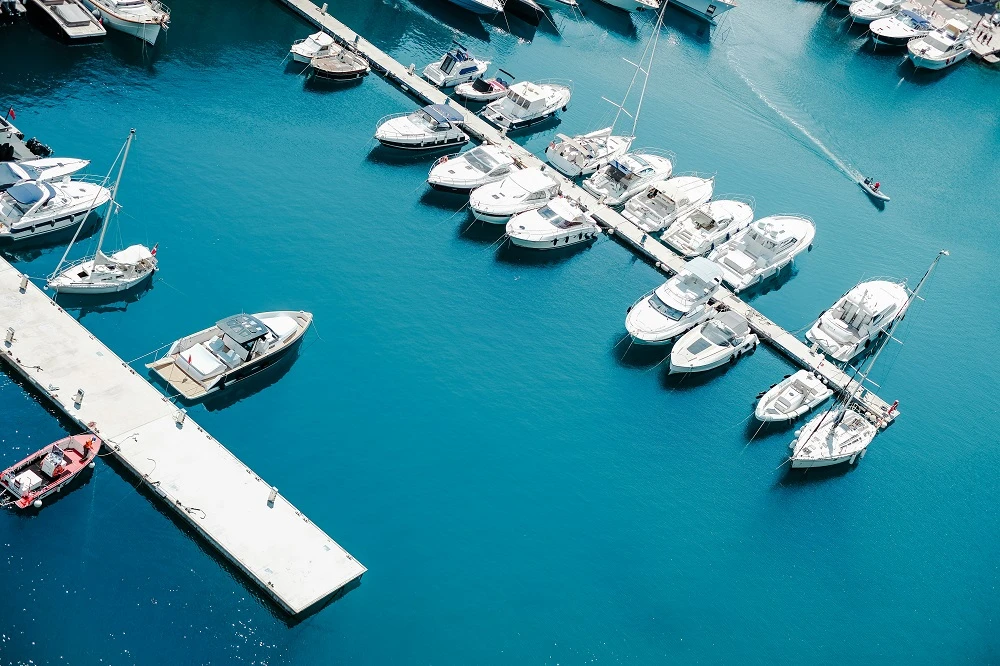
The Marina-Cost Comparison
Some owners use anchorages primarily for the experience. Others anchor because regular marina nights would make long-term cruising unaffordable.
To compare monitoring with berthing costs, use your own cruising area and boat size. Marina prices vary enormously by country, season, beam, facilities and contract length.
A simple calculation is:
Monitoring cost ÷ marina cost per night = equivalent number of marina nights
For example, if a berth suitable for your boat costs €50 per night, €1,500 is equivalent to 30 nights. At €100 per night, it is equivalent to 15 nights.
This does not mean that buying an alarm makes every anchorage a substitute for a marina. Monitoring cannot create shelter, improve the seabed or provide help during dangerous winter weather.
But for an experienced cruiser already choosing appropriate anchorages, avoiding even a portion of a season’s marina fees can place the hardware cost in context. Our guide to the best anchorages in Greece and how to stay secure overnight illustrates how shelter and local conditions should remain central to that choice.
The same logic applies to owners planning to remain at anchor for extended parts of the summer or cruise regions where marina berths for larger catamarans are particularly expensive.
Before treating anchoring as a berthing strategy, make sure the physical complete boat anchoring system—anchor, chain, windlass, connectors, snubber or bridle—is properly specified and maintained.
What are You Paying for Beyond an App?
The comparison is not simply €1,500 for an alarm sound versus €0 for an alarm sound.
Most phone and chartplotter alarms monitor the GPS position of the boat. The user estimates the anchor location and selects a radius that allows the boat to swing without triggering unnecessary warnings.
That approach works well for many owners, and our comparison of the best anchor alarms for boats explains the available app and system options.
The challenge is that the boat is supposed to move at anchor. A long scope and a large wind shift can carry it through a wide arc while the anchor remains stationary.
Set a tight radius and normal swinging may cause nuisance alarms. Set a broad radius and the anchor may move before the boat reaches the boundary.
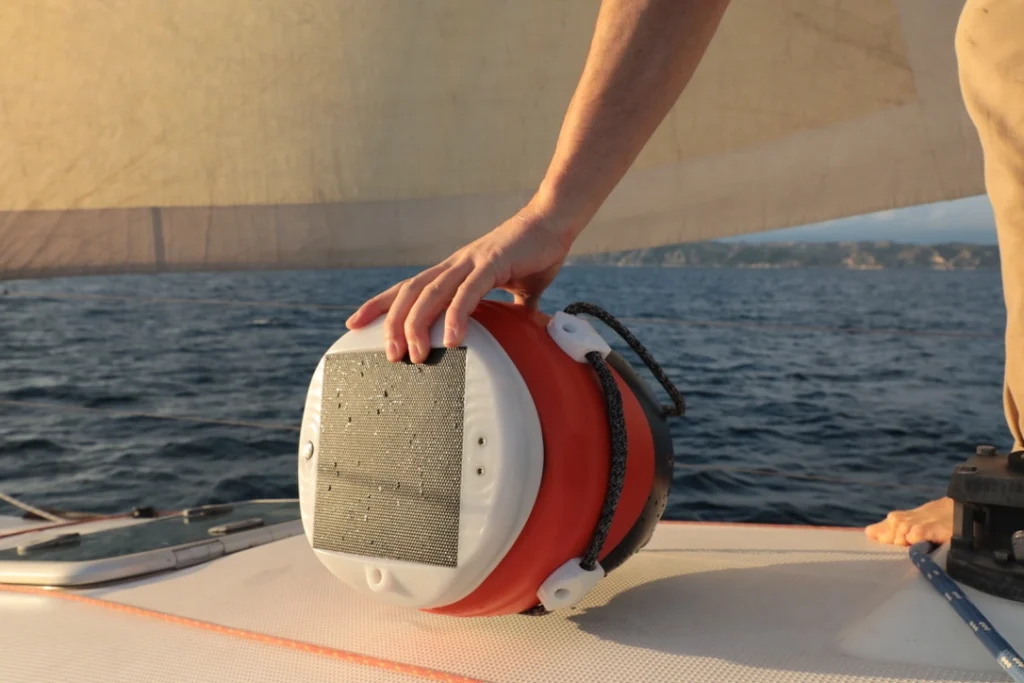
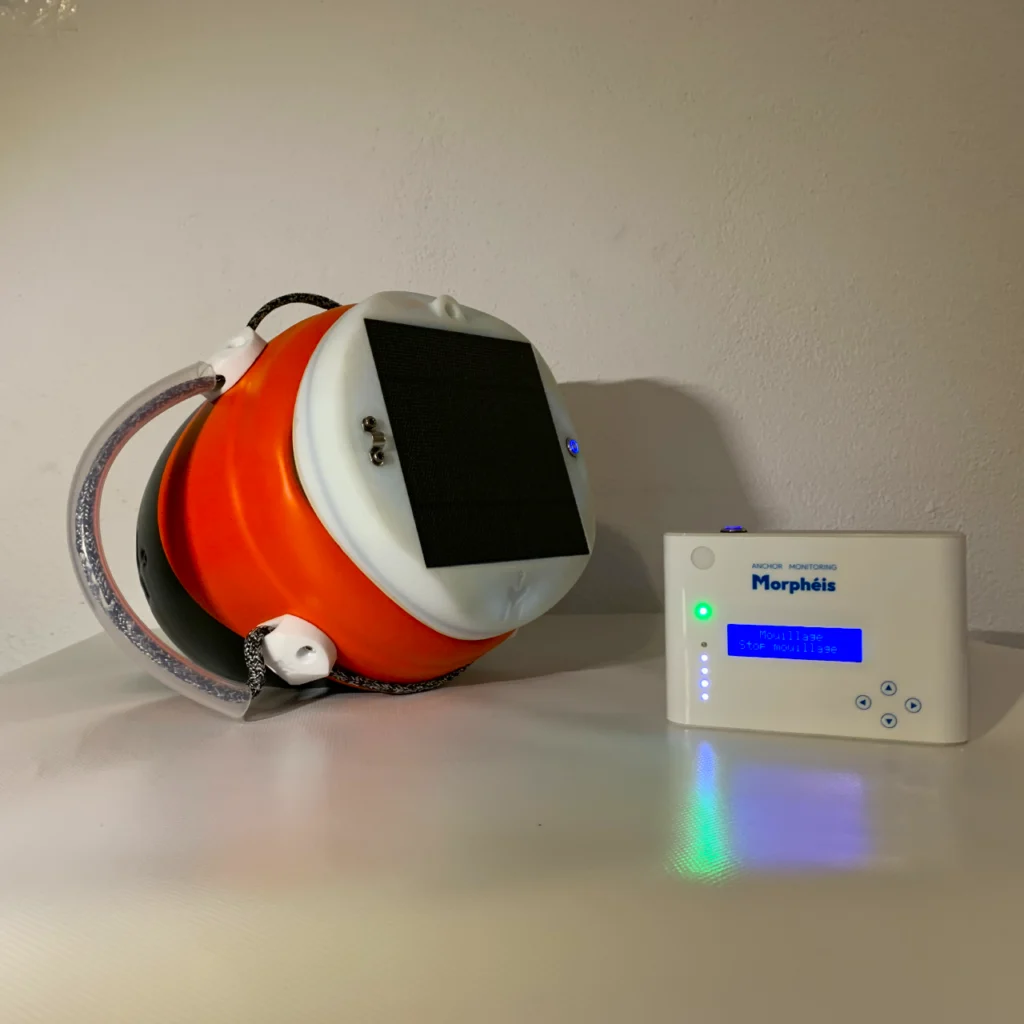
Morphéis is currently €1,499 including EU VAT where applicable. Instead of using the boat’s GPS position to infer whether the anchor is holding, its GPS buoy remains above and monitors the anchor itself.
The system includes:
- anchor-level GPS movement monitoring;
- a dedicated portable onboard receiver;
- a direct radio link between buoy and receiver;
- a 100 dB onboard alarm;
- solar charging with battery backup;
- automatic night lighting;
- optional SMS notifications using a user-supplied SIM where coverage is available;
- a mechanical buoy and Dyneema trip line that can assist with locating or recovering the anchor.
The buyer is therefore paying for independent marine hardware, not merely another version of a phone interface.
Whether those features justify the premium depends on whether their independence and frequency of use solve a meaningful problem for that owner.
When The €1,500 is Probably Not Worth It
You own a low-value boat and anchor occasionally
If a €1,500 purchase represents 10–15% of the boat’s total value, it needs a very strong personal justification.
For a €10,000 boat used for occasional lunch stops, that money would normally be better prioritised towards essential maintenance, reliable ground tackle, communications or other safety equipment.
A free anchor alarm app can be entirely appropriate.
You charter for holidays
A person chartering for one or two weeks each year does not need to own dedicated anchor-monitoring hardware. Use a reputable app, understand the charter boat’s equipment and follow the operator’s guidance.
The boat is predominantly marina-based
If the boat spends nearly every night attached to a pontoon and anchors for only a few calm afternoons, the cost per use will remain high.
You already trust your current alarm
If a phone app or chartplotter alarm is correctly configured, wakes the crew and has not created persistent false-alarm problems, there may be no practical issue to solve.
An upgrade should address a real limitation, not simply add another electronic product.
The basic anchoring equipment needs work
Monitoring a weak system does not make it strong.
If the anchor is unsuitable, the chain is badly corroded, there is insufficient rode or the windlass installation is unsafe, correct those priorities first. Begin with the guide to choosing the best anchor for your boat and our practical article on how much anchor chain to let out.
When It Becomes Easier to Justify
A €300,000–€500,000 cruising catamaran
At this value, €1,500 represents approximately 0.3–0.5% of the boat.
Catamarans also attract higher marina charges because of their beam, making anchoring a central part of many owners’ cruising plans. High windage and the importance of a correctly configured bridle add to the need for a complete, carefully monitored setup.
If the boat regularly spends nights at anchor or is left while the crew go ashore, dedicated monitoring is a proportionate consideration rather than an extravagant accessory.
A high-value motor yacht
For a vessel worth €750,000 or €1 million, the hardware represents only 0.2% or 0.15% of its approximate value.
That alone does not create a need. But if the yacht anchors frequently, the price becomes small relative to the vessel, its systems and the potential consequences of late detection.
A €60,000 liveaboard
This is where boat-value percentages alone become misleading.
€1,500 is 2.5% of a €60,000 boat—a significant amount. But if the boat is the owner’s home, contains most of their possessions and spends 150–250 nights a year at anchor, its personal value is much greater than its resale value.
The cost per night can be low, and the monitoring system may be used more intensively than almost any piece of equipment aboard.
A long-distance or remote cruiser
Cruisers using isolated anchorages place greater value on systems that can perform their core onboard function independently of phone apps and internet data.
Morphéis’ buoy-to-receiver communication uses a direct radio link. Optional SMS messages beyond the boat still depend on a suitable SIM and mobile coverage, but the onboard monitoring and alarm do not require internet access.
An owner who routinely leaves the boat at anchor
The value rises when the boat is left during meals, provisioning or trips ashore. Visual transits and chain vibration are no longer available to the absent crew.
Remote notification can provide valuable warning, although every owner still needs a realistic response plan. An alert is most useful when someone can return to the boat safely and promptly.
A crew exhausted by nuisance alarms
An alarm is only valuable if people trust it.
Repeated warnings caused by normal swinging can lead crews to widen boundaries, lower the volume or turn the system off. If upgrading restores confidence and changes how reliably the crew responds, the benefit is partly operational and partly human.
This is closely connected to the ability to sleep better at anchor without constantly checking.
The Cost of Late Detection is Not Only Boat Replacement
It is tempting to compare €1,500 only with the total value of the vessel. Anchor-drag incidents can create other consequences long before a boat becomes a total loss.
Depending on the circumstances, late detection can involve:
- damage to the owner’s hull, rudder, propeller or ground tackle;
- contact with another boat;
- emergency haul-out or towing;
- interrupted cruising plans;
- insurance excesses or uninsured costs;
- danger to crew attempting to recover the situation;
- loss of confidence in overnight anchoring.
The probability and cost of these outcomes cannot be reduced to one universal number. Insurance terms, repair rates and cruising conditions vary.
The decision is therefore not “Will this product save a €500,000 boat?” It is “Does faster, more trustworthy information reduce a risk that matters enough in my particular use?”
Could €1,500 be better spent elsewhere?
This is one of the most important questions.
Before purchasing premium monitoring, compare it with other potential upgrades:
- replacing an under-sized or unsuitable anchor;
- renewing corroded chain and worn connectors;
- adding a correctly sized nylon snubber or catamaran bridle;
- servicing the windlass and electrical supply;
- improving batteries or charging reliability;
- buying communications and lifesaving equipment;
- addressing known engine or steering problems.
If one of these is an obvious weakness, fix it first.
Morphéis is most rational when it completes an already competent anchoring arrangement. It should not consume the budget needed to make the underlying system safe.
A Practical Decision Framework
Work through the following questions.
1. How often do you anchor overnight?
- Fewer than five nights a year: use an app unless there is an unusual reason to upgrade.
- Five to 30 nights: compare your experience with apps and the conditions you encounter.
- Thirty to 100 nights: dedicated monitoring becomes increasingly reasonable.
- More than 100 nights: cost per use and lifestyle value strongly favour considering it.
These are not hard rules; they are a way to expose whether the equipment will be used.
2. What percentage of the boat’s value is €1,500?
Below 0.5%, the purchase may fit naturally within a high-value vessel’s equipment budget. Above 5–10%, it needs exceptional lifestyle justification.
3. Is the boat also your home?
If yes, market value understates the personal consequence of an incident and the number of nights the system will operate.
4. Do you regularly go ashore while anchored?
If yes, examine how remote notifications work, what coverage they require and how quickly you can respond.
5. Does your present alarm have your trust?
If you configure it correctly and respond immediately, it may already be enough. If you routinely ignore or disable it, something needs to change.
6. Is the physical anchoring system sound?
Monitoring comes after the correct anchor, rode, connectors, shock absorption and technique.
7. What is the realistic alternative?
Compare the purchase with your own marina fees, alternative monitoring equipment and the value you place on spending more nights comfortably at anchor.
So, is it worth it?
For a day boat, annual charterer or marina-based occasional sailor, probably not. A free or inexpensive app is usually a more proportionate answer.
For a frequent cruiser, full-time liveaboard or owner of a high-value yacht that regularly anchors, €1,500 can be a rational investment in earlier information and a more complete safety system.
The strongest case is not simply “my boat is expensive.” It is:
My boat matters greatly to me, I anchor often, and I want independent monitoring that tells me whether the anchor itself has moved.
The weakest case is purchasing premium electronics while ignoring an unsuitable anchor, damaged chain or poor anchoring practice.
Use a free app when it meets the need. Upgrade when anchoring is frequent enough, valuable enough and important enough that uncertainty itself has become the problem.
Explore Morphéis and decide whether anchor-level monitoring fits your boa