

How to Tell If Your Anchor Is Dragging (Before It Becomes a Problem)
Even when you anchor perfectly, there is always a moment of uncertainty.
You approach the bay carefully, drop the anchor into the wind, deploy the correct amount of chain, and reverse gently to make sure the anchor is set. Everything seems secure.
But hours later the wind shifts. A squall moves through. Or the tide begins to turn.
Suddenly you find yourself sitting up in the cockpit or looking out of the cabin window wondering:
Is my anchor still holding?
This situation is incredibly common for boaters spending the night at anchor. Even experienced sailors regularly check their position when conditions change.
Understanding the signs of anchor dragging can help you detect problems early and prevent a stressful situation from becoming dangerous.
Why Anchors Drag
Even the best anchoring setups can occasionally fail.
Anchors may drag for several reasons:
- sudden wind shifts
- stronger winds than expected
- poor seabed conditions
- insufficient anchor scope
- the anchor failing to reset after a change in direction
In many cases, the anchor may begin dragging slowly before the boat starts drifting significantly.
This is why early detection is so important.
For a full guide on setting your anchor properly, see our article on safe anchoring practices:
[How to Anchor Safely Overnight]
Sign 1: Fixed Landmarks Begin to Move
One of the simplest ways to detect anchor dragging is by using reference points on land.
When your anchor is holding properly, objects on shore should remain in the same position relative to your boat.
For example:
- a tree on the shoreline
- a building or dock
- a mountain or headland
If these reference points begin shifting position relative to each other, your boat may be moving.
This method works well during daylight hours when visibility is clear. At night, however, it becomes much harder to rely on visual references alone. Which is of course when these things tend to happen.
Sign 2: Your Distance to Other Boats Changes
Another common way boaters detect anchor dragging is by watching nearby boats.
If your boat begins drifting closer to another anchored boat, it could indicate that your anchor is dragging.
However, this method has an obvious limitation. Other boats may also be dragging.
Still, if you observe movement relative to multiple nearby boats, it can provide a useful indication that something is changing.
In crowded anchorages, even small movements can become concerning very quickly.
Sign 3: Your GPS Track Begins to Drift
Many boaters rely on chartplotters or smartphone apps to monitor their position at anchor.
These systems can show the boat’s movement over time, often creating a track on the chart display.
If the track begins to extend steadily in one direction, it may indicate that the boat is drifting.
However, GPS-based monitoring comes with a major challenge. Boats naturally move while anchored. As wind and current shift, the boat may swing around the anchor in a wide arc. The anchor chain may stretch out further in stronger winds, causing the boat’s position to change.
This means your GPS track will always show movement, even when the anchor is holding perfectly.
This is one reason why traditional anchor alarms often produce false alerts.
You can learn more about how these systems work in our guide to anchor alarms:
Sign 4: The Boat’s Orientation Changes Unexpectedly
Another possible sign of anchor dragging is a sudden change in the boat’s orientation.
Boats normally sit with the bow pointing into the wind or current.
If the boat begins turning in unusual ways or moving sideways relative to the wind, it may indicate that the anchor is no longer holding securely.
In stronger winds, this movement can happen very quickly.
Sign 5: You Feel the Boat Moving Differently
Experienced boaters often notice anchor dragging simply through the motion of the boat.
A boat with a properly set anchor typically moves in a predictable swinging pattern.
If the motion suddenly changes or the boat begins drifting steadily in one direction, it may indicate that the anchor has lost its grip.
This is particularly noticeable during strong winds or storm conditions.
The Problem with Detecting Anchor Dragging
While these techniques can help identify anchor dragging, they all share one major limitation.
They rely on observing the boat’s movement. But boats naturally move while anchored. This creates constant uncertainty.
Is the boat simply swinging with the wind?
Or is the anchor actually dragging across the seabed?
For many boaters, this uncertainty leads to restless nights at anchor.
People often find themselves repeatedly checking GPS tracks, scanning nearby boats, or looking for reference points on land. Even then, you may only realize the anchor is dragging after the boat has already moved 10–20 metres or more.
The Simpler Way to Detect Anchor Dragging
Instead of monitoring the boat, a better solution is to monitor the anchor itself.
If the anchor remains fixed in the seabed, there is no reason for concern.
If the anchor begins to move, that is the moment you need to know.
This is exactly what modern anchor monitoring systems are designed to do.
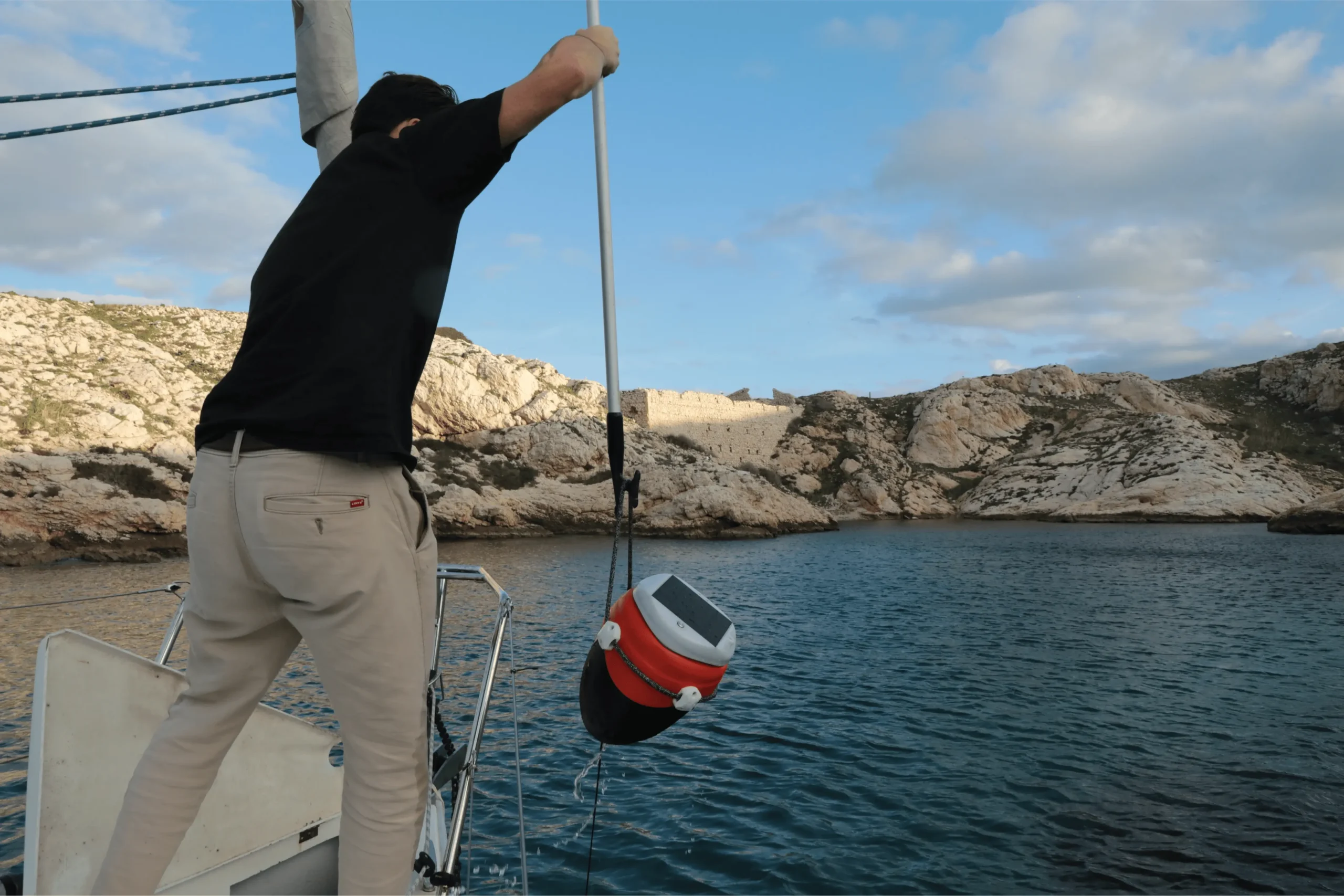
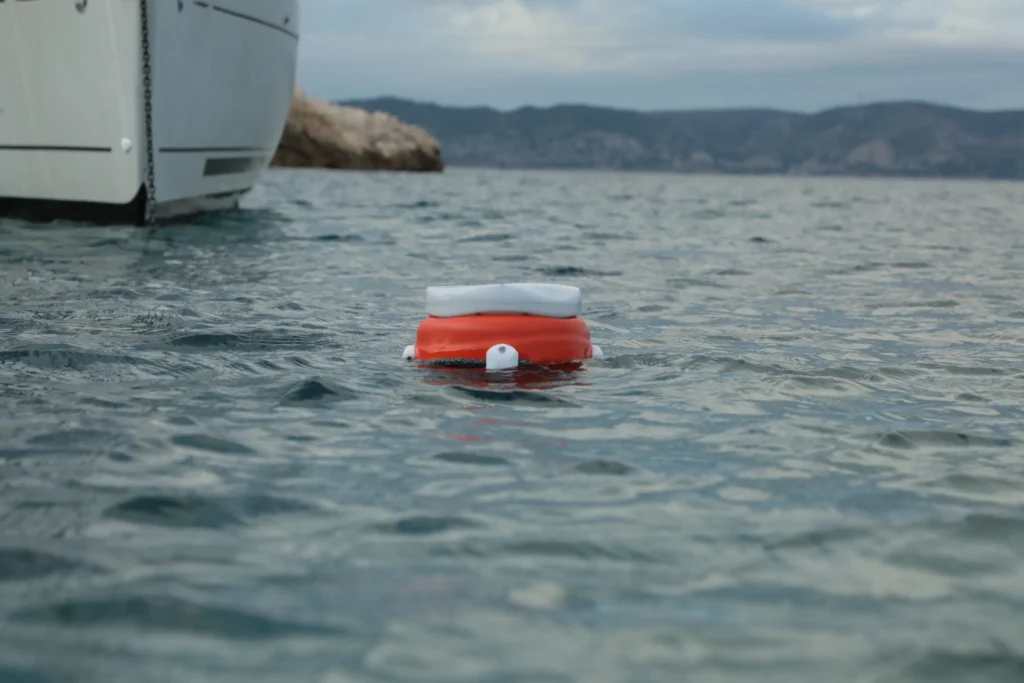
The Morphéis smart anchor buoy, attaches directly to the anchor line before deployment.
As the anchor drops to the seabed, the buoy remains directly above it and begins tracking its position.
If the anchor moves even a few metres across the seabed, the system immediately sends an alert.
Because the system monitors the anchor rather than the boat, normal swinging motion does not trigger false alarms.
This means you know the moment the anchor actually begins to drag.
Morphéis: The Smart Anchor Buoy
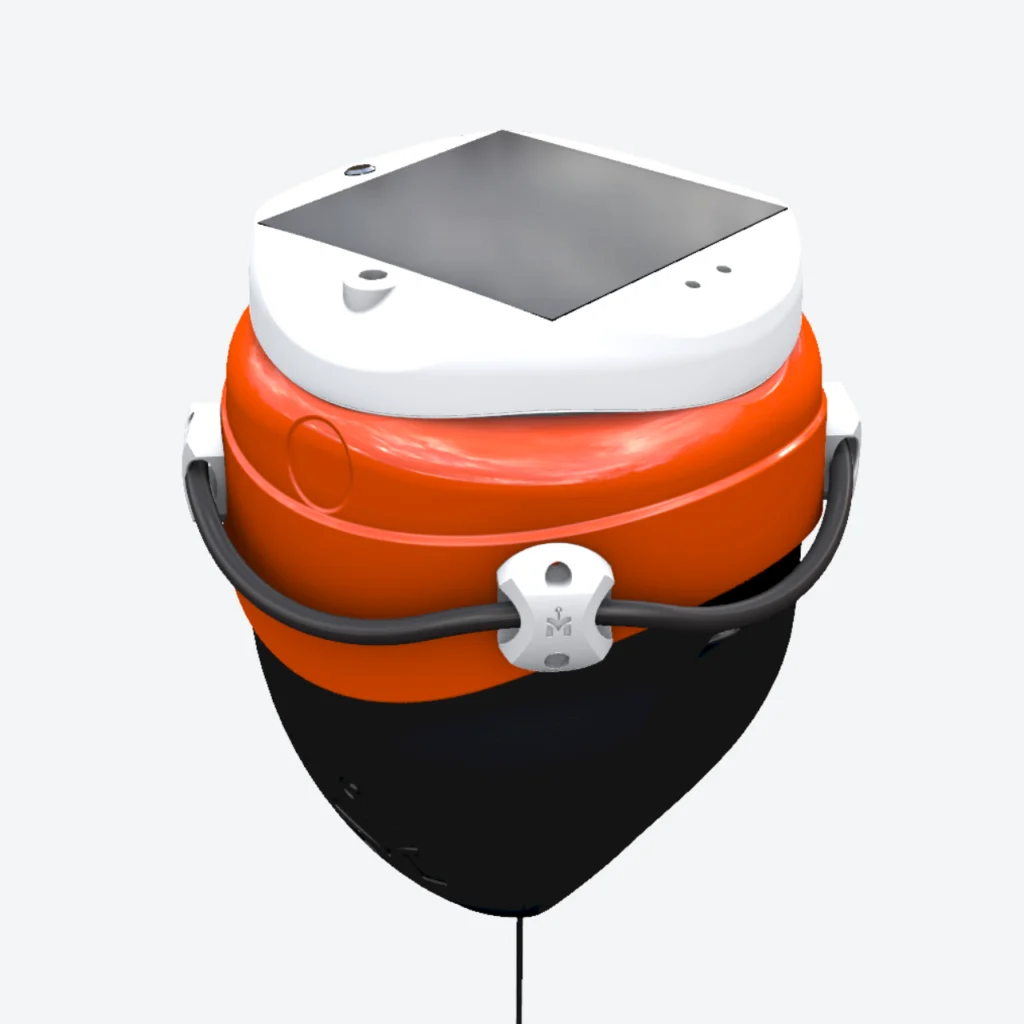
The Morphéis smart anchor buoy, developed by Mooring Solution, attaches directly to the anchor line before deployment.
Once the anchor is dropped, the buoy remains directly above it and tracks its position.
If the anchor begins to move even a few metres across the seabed, the system immediately sends an alert.
Because the system monitors the anchor rather than the boat, normal swinging motion does not trigger false alarms.
You can learn more about how the system works here: