

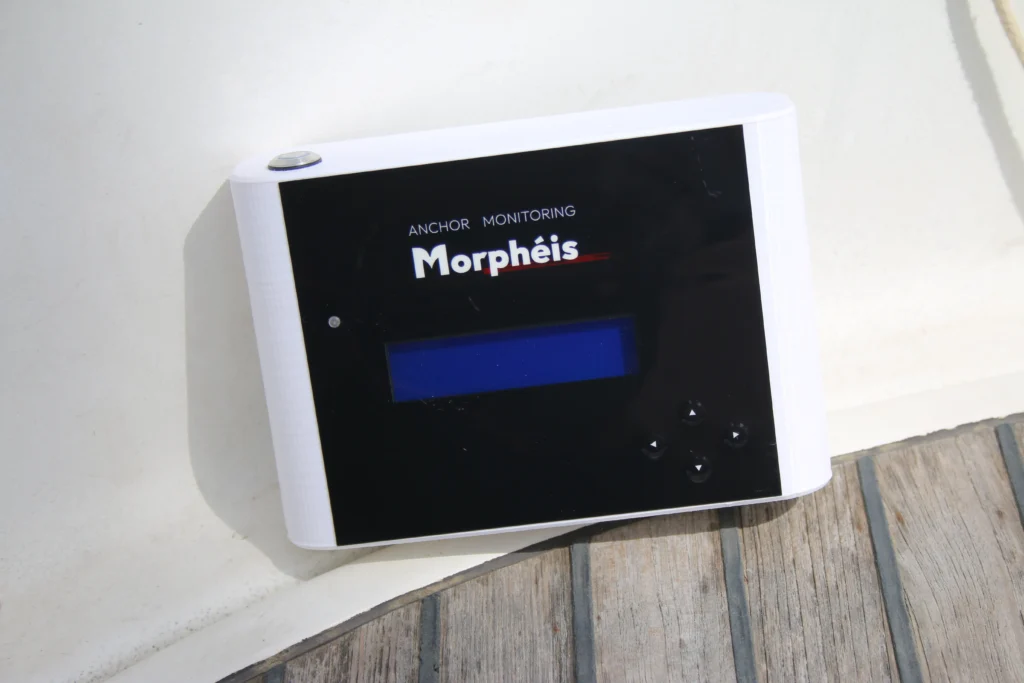
If you own a 40–60ft boat and spend a reasonable amount of time at anchor, a GPS anchor buoy can make a lot of sense.
But it isn’t automatically something every boat needs.
If you mainly anchor for lunch, stay onboard and already have an anchor alarm on your phone or chartplotter that you’re happy with, that may be all you need.
If you regularly anchor overnight, leave the boat to go ashore or simply want to know what is happening at the anchor itself, rather than trying to work it out from the movement of the boat, a dedicated GPS anchor system becomes much more interesting.
So rather than telling you that every 40–60ft boat needs one, let’s look at the questions that actually matter.
First, what does a GPS anchor buoy do differently?
Most anchor alarms monitor the position of your boat.
You set a radius around the anchor and, if the boat moves outside that area, the alarm goes off.
It’s simple, cheap and, in many situations, perfectly good enough.
The complication is that boats are supposed to move at anchor.
They swing when the wind changes. They move with the tide. The chain stretches out, relaxes and then stretches out again.
So when your boat moves at 2am, the question becomes:
Is the anchor moving, or is the boat just swinging normally?
A GPS anchor buoy takes a different approach.
Morphéis places the GPS monitoring point at the anchor, using a connected anchor buoy positioned above it. Instead of primarily watching where the boat goes, it watches for movement at the anchor.
That’s the basic idea behind:
Monitor the anchor. Not the boat.
It doesn’t stop an anchor from dragging and it doesn’t replace good anchoring, weather awareness or normal seamanship. What it gives you is another piece of information: whether the point above your anchor has moved beyond the tolerance you have set.
If you want a broader comparison of the different types of anchor alarms first, read Best Anchor Alarm for Boats: Apps, Systems & What Actually Works.
Is your boat suitable for an anchor buoy?
For most owners in the 40–60ft range, boat length isn’t actually the big question.
Your chain and normal anchoring depth matter more.
What size chain do you have?
Morphéis is designed for chain up to 18 mm in diameter.
That’s going to cover plenty of boats in this size range, but it’s worth checking before going any further.
How deep do you normally anchor?
The published maximum anchoring depth is 23 m.
Again, that’s comfortably more than many cruising boats will regularly need. If you’re often anchoring in particularly deep water, however, this is one of the first specifications to check.
The buoy contains 25 m of 3 mm Dyneema line, with automatic line tension built into the mechanical buoy.
For most normal cruising situations, there isn’t much more to it than that.
Chain under 18 mm? Usually anchoring in less than 23 m? You’re already past the two main compatibility questions.
For more on anchors, chain, windlasses and how everything works together, see The Complete Boat Anchoring System: Anchor, Chain, Windlass & Monitoring.
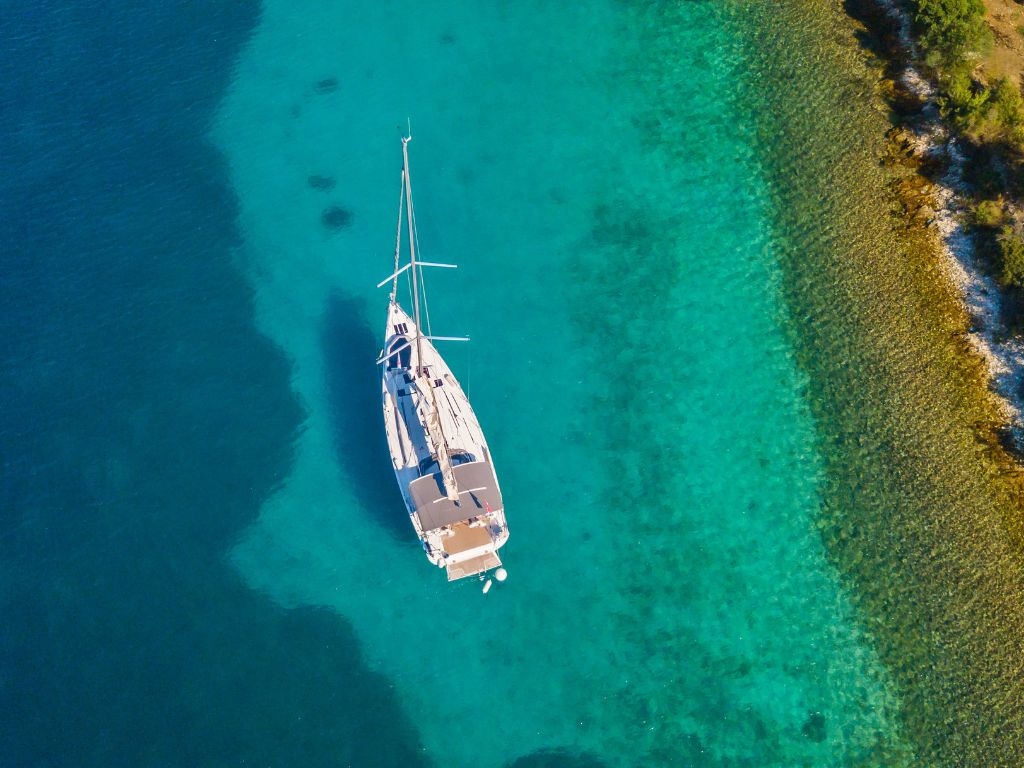
How often do you actually anchor?
This is probably the bigger question.
If you anchor occasionally
Let’s say you mostly stay in marinas and drop the hook every so often for lunch or a swim.
You’re onboard. Conditions are fairly settled. You’re keeping an eye on what is happening around you.
A phone-based anchor alarm may be more than enough.
There’s no point adding dedicated hardware simply because dedicated hardware exists.
If you spend nights at anchor
This is where an independent anchor monitor starts to become more useful.
Anyone who has spent a lot of nights at anchor knows the routine.
You wake up. Something feels different. Maybe the wind has shifted. You look outside, check the plotter and try to decide whether the boat has actually moved or whether you’ve simply swung around to the other side of the anchor.
A conventional GPS alarm can tell you where the boat is.
An anchor-referenced GPS buoy gives you information from the anchor position as well.
For people who anchor regularly, that’s a meaningful difference.
If you regularly go ashore
This is another strong use case.
When you’re sitting on the boat, you’ve got plenty of ways to work out what is going on.
When you’re having dinner ashore and your boat is sitting in the bay without you, that’s obviously a little different.
Morphéis can send SMS alerts to up to two phone numbers, so you can receive an alert while away from the boat.
The system uses a Micro SIM with the PIN disabled. Network availability and roaming will depend on the SIM provider and local mobile coverage, rather than Morphéis itself.
That also means the onboard monitoring and the away-from-boat alerts are two separate things. The dedicated receiver onboard communicates directly with the buoy by radio, so onboard alerts do not depend on mobile data or a phone app.
If you’re weighing up whether a phone is already enough for the way you anchor, we’ve covered that separately in When Is a Free Anchor Alarm App Enough—and When Should You Upgrade?.
Is it a pain to deploy and pick back up?
This is a fair question because nobody wants to make anchoring unnecessarily complicated.
In normal use, Morphéis is attached near the anchor as you deploy your ground tackle. The buoy is placed in the water after roughly 10 m of chain, and the system then monitors from above the anchor.
Recovery is equally straightforward on most boats.
As you come back towards the anchor, you bring the buoy alongside, reach down with a boat hook and lift it aboard.
That’s basically it.
On a typical 40–60ft cruising boat, this shouldn’t be a particularly complicated part of the anchoring process.
Very high freeboard is the obvious exception.
If you’re on a particularly tall catamaran or another boat where reaching the water with a boat hook is difficult, you’ll need to think a little more about how you recover it.
Even then, you’re not stuck. The buoy remains connected by its Dyneema line. In a worst-case scenario, you can recover the anchor normally and then retrieve the buoy using the line once everything is back at the boat.
For larger vessels with crew or a tender already in use, retrieving the buoy from a dinghy is another simple option.
The point isn’t that every boat will handle it identically. It’s that for most boats in this size range, deployment and recovery are fairly simple.
Do you want something separate from your phone?
This is probably one of the bigger reasons to look at a dedicated GPS anchor system.
Phone apps are convenient because you already own the hardware.
But your phone is also your camera, navigation backup, messaging device, entertainment, weather source and about twenty other things.
Morphéis uses a separate onboard receiver.
The buoy communicates with it over an independent 868 MHz radio link, with a published recommended maximum distance of 100 m between the buoy and receiver.
The receiver has a 100 dB audible alarm and a published battery autonomy of 48 hours.
For onboard anchor watch, you therefore don’t need:
- a phone app running in the background
- mobile reception
- mobile data
- your phone left permanently at the chart table
- another overnight drain on your phone battery
That won’t matter to everyone.
If you’re completely happy using your phone, there’s nothing wrong with that.
But if you’re spending night after night at anchor, having one bit of equipment whose only job is watching the anchor can be reassuringly simple.
When is a normal anchor alarm enough?
Quite often.
A dedicated connected anchor buoy probably isn’t necessary if:
- you only anchor occasionally
- you’re normally onboard while anchored
- most of your anchoring is during the day
- your current anchor alarm works well for you
- you’re comfortable interpreting your boat’s normal swing
- you don’t particularly need alerts while ashore
- you don’t want another piece of equipment to deploy
That’s not a criticism of phone apps or chartplotter alarms. They solve a real problem and for a lot of boaters they’re the right answer.
The reason to move to a dedicated anchor monitor is when the difference between watching the boat and monitoring the anchor itself becomes useful to you.
There’s also obviously a cost involved. We’ve gone into that separately in Is a €1,500 Anchor-Monitoring System Worth It?.
A quick 40–60ft boat checklist
Still unsure? Run through this.
Your boat
- [ ] My anchor chain is 18 mm or smaller.
- [ ] I normally anchor in less than 23 m of water.
- [ ] I can reach the water easily enough with a boat hook to pick the buoy up.
- [ ] Adding the buoy to my normal anchoring routine isn’t going to be a major hassle.
How you anchor
- [ ] I regularly spend nights at anchor.
- [ ] I regularly leave the boat while it’s anchored.
- [ ] I anchor often enough that monitoring is important to me.
- [ ] I regularly deal with strong wind or passing storms.
- [ ] I’ve had nights where I’ve wondered whether the anchor was moving or the boat was simply swinging.
What you want from an anchor monitor
- [ ] I’d rather monitor movement at the anchor than rely only on the boat’s position.
- [ ] I like the idea of a dedicated onboard receiver.
- [ ] I don’t want my main onboard anchor alert to depend on my phone.
- [ ] SMS alerts while I’m ashore would be useful.
If you’re ticking most of those boxes, a GPS anchor buoy is probably worth looking at seriously.
If you’re ticking two or three, your existing setup may already be doing everything you need.
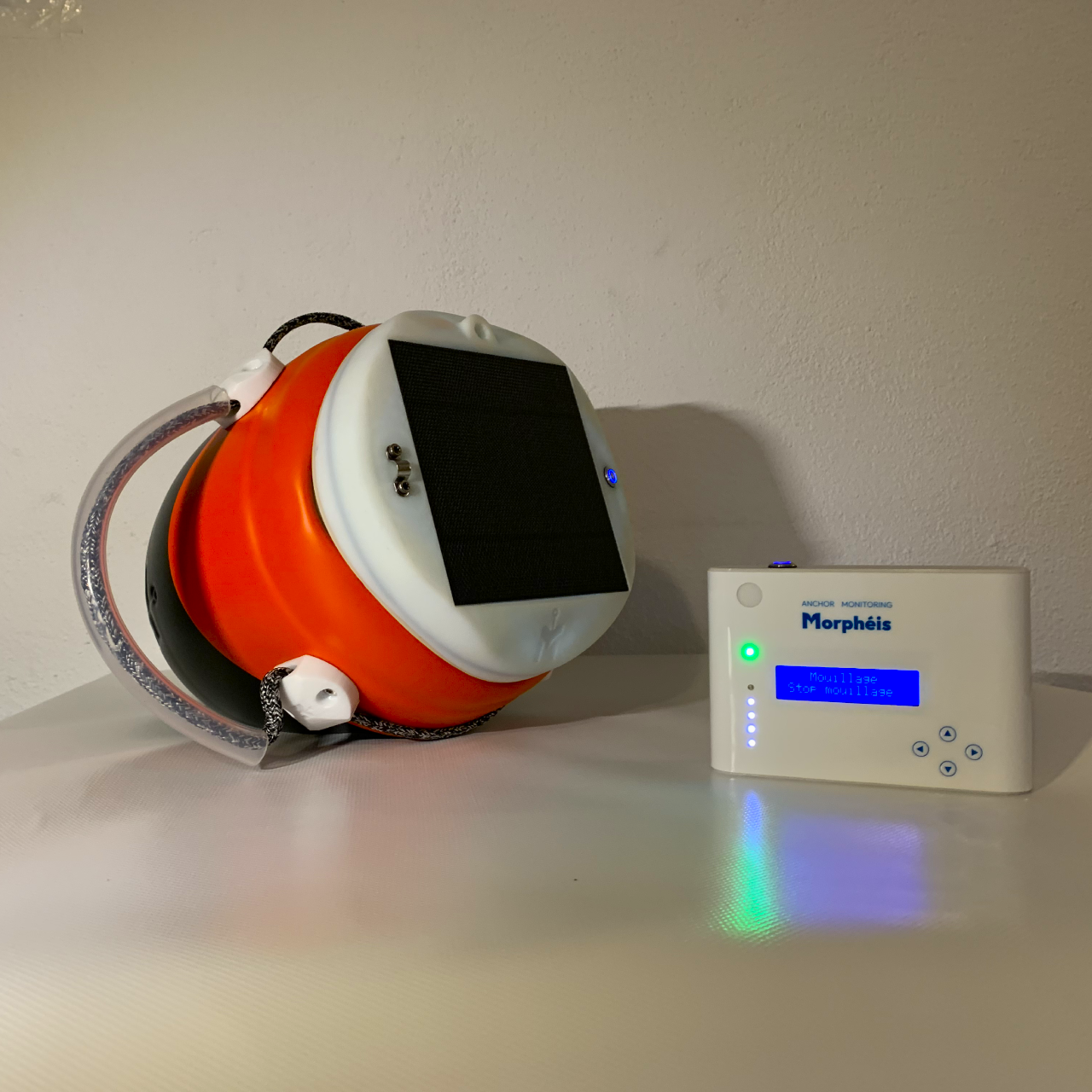
How does Morphéis actually work?
Morphéis has three main parts:
- the mechanical anchor buoy
- the waterproof electronic enclosure
- the dedicated onboard receiver
The buoy sits above the anchor and uses GPS to monitor its position.
If it moves beyond the drag tolerance you’ve set, the system confirms the movement and alerts the receiver onboard.
The recommended minimum drag tolerance is 4 m, which allows for the normal movement of the buoy itself.
In Mooring Solution’s own testing, movement detection has consistently occurred within 40 seconds.
The electronic enclosure is rated IP68, qualified to 1 m depth for 1 hour, and includes 16 LEDs for night visibility.
It is powered by a rechargeable Li-ion battery with a published 72 hours of autonomy without sunlight. An integrated 5 W solar panel helps keep it topped up, with around two hours of direct sunlight specified for solar replenishment.
The onboard receiver is separate and communicates with the buoy by radio. If you’re away from the boat, Morphéis can also send SMS alerts to up to two phone numbers when a suitable SIM and mobile network are available.
The current Morphéis price is €1,499 including EU VAT where applicable.
So there is more hardware involved than simply opening an anchor alarm on your phone.
But that’s also the point.
It’s a dedicated system built specifically to monitor what is happening at the anchor.
A couple of practical edge cases
There are a few situations where we’d think a little harder before buying.
You have very high freeboard
If reaching a buoy in the water with a normal boat hook is difficult from your deck, work out your recovery method first.
It’s still recoverable through its line or from a tender, but you don’t want to discover that your preferred routine is awkward after you’ve bought it.
You regularly anchor deeper than 23 m
Morphéis has a published maximum anchoring depth of 23 m, so it isn’t designed for every possible anchoring situation.
You almost never anchor
This is the obvious one.
If you spend 95% of your cruising time in marinas, buying a €1,499 dedicated GPS anchor system probably isn’t going to be at the top of your list.
You already trust your existing setup completely
Also completely reasonable.
Morphéis isn’t about saying every other type of anchor alarm is useless.
It’s for boaters who specifically want anchor-level monitoring, rather than relying entirely on movement measured at the boat.
So, is a GPS anchor buoy right for a 40–60ft boat?
For many boats in this size range, yes.
But the real deciding factor isn’t whether your yacht is 42ft, 48ft or 58ft.
It’s how you use it.
If you’re regularly spending nights at anchor, leaving the boat to go ashore and relying on anchoring as a normal part of cruising, dedicated monitoring becomes much easier to justify.
If you mostly anchor occasionally during the day, a phone or chartplotter alarm might genuinely be all you need.
Morphéis is designed for the first group.
It gives you a dedicated anchor monitoring system, a connected anchor buoy, an independent onboard receiver and optional SMS alerts when you’re away from the boat.
Most importantly, it changes what you’re watching.
Monitor the anchor. Not the boat.
See how Morphéis works and find out whether it’s right for your boat.