

By the Mooring Solution team
“Did anyone remember to put the anchor alarm back out?” That’s a question we at Mooring Solution wanted to take out of the evening routine when we started building Morphéis. We wanted a solar powered anchor alarm that could recharge while it kept watch above your anchor.
We wanted the routine to be the same whether you were stopping for one night or spending a month in the same anchorage. Deploy the buoy when you anchor, start monitoring on the onboard receiver, and leave the buoy in place until you’re ready to move on. That made solar a requirement from day one.
TLDR:
- Built-in 5 W solar panel
- About two hours of good sun replenishes what the buoy uses in a full night
- Up to 72 hours with zero sun
- Onboard receiver battery: 50 hours, charged by USB-C or the same wireless cradle
- Magnetic mount with soft shackle
Why we took on the extra cost and complexity
There were already a handful of ways to monitor the anchor itself. Our guide to the best anchor alarm for boats covers how those options compare. We saw room for a solar powered anchor alarm — a GPS buoy that could recharge while it was out doing its job.
An integrated solar panel added cost and gave us more to work out. We had to fit it into a sealed head unit and keep power consumption low enough for the panel to replenish the battery. We thought that work was worth doing if it meant people would actually use the buoy every time they anchored.
- You don’t have to bring the buoy in each night to charge it.
- It suits a long stay, not just one night.
- You don’t have to remember a charging trip every day.
- An alarm that stays in the locker or sits on a charger can’t tell you when your anchor drags.
- Manual charging is only the backup.
What solar changes on a night or a month at anchor
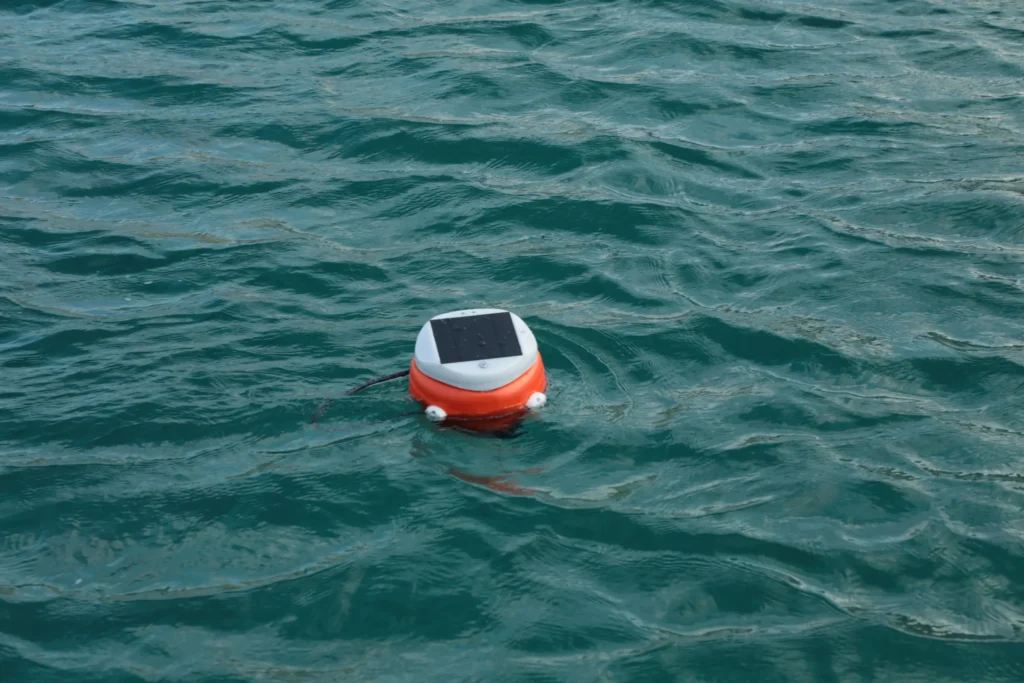
The GPS, battery, and 5 W solar panel sit in a sealed unit on top of the buoy. We call it the brain. The panel tops up the battery during the day, and the battery keeps the GPS and the buoy’s lights running after dark.
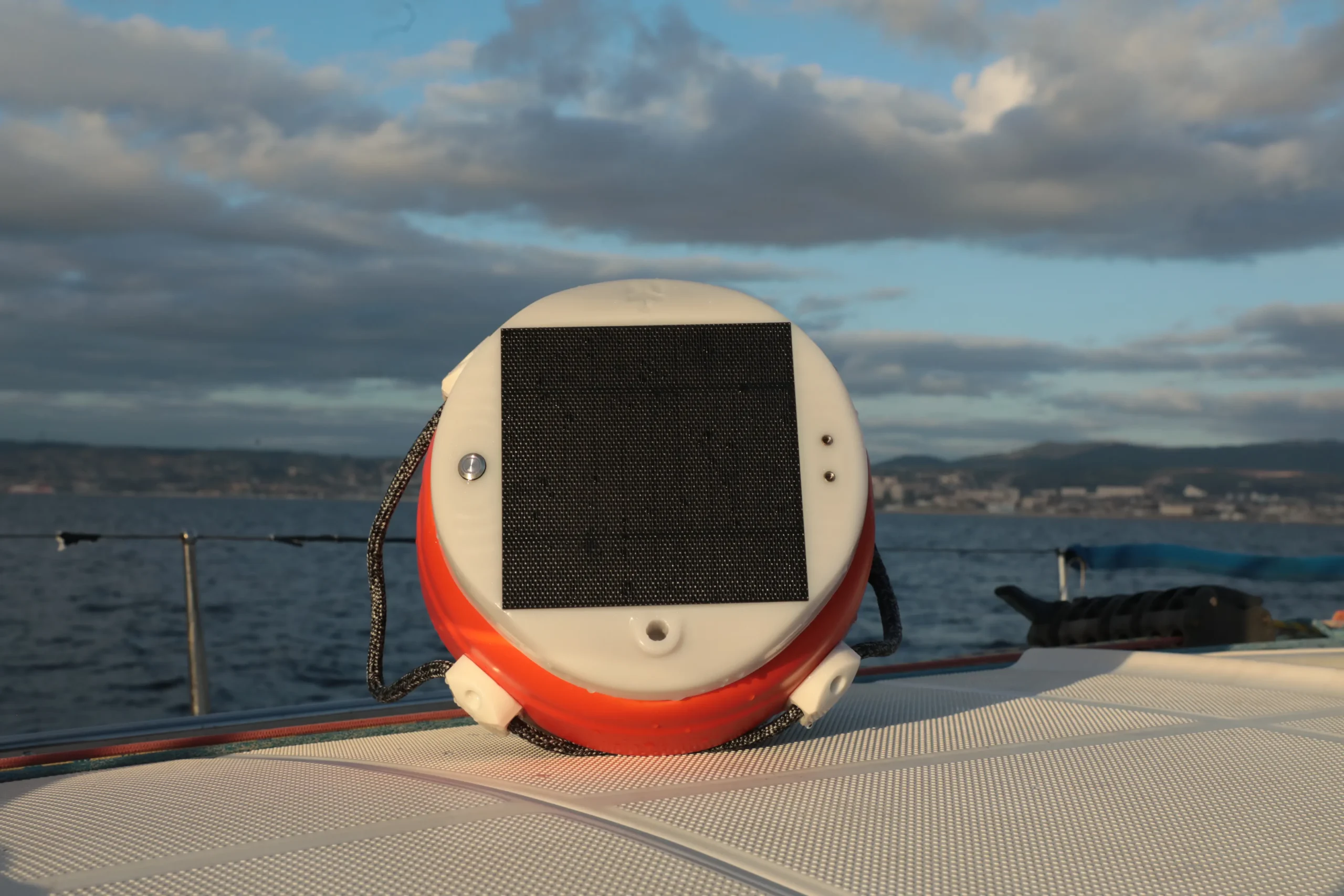
Arrive late on a Friday with a charged battery and the buoy can keep watch through the night. By breakfast, the panel can already be topping it up.
Stay for a month and that same cycle can keep a solar powered anchor alarm running continuously, provided it gets enough sunlight to replace the energy it uses. That’s what we designed for in typical Mediterranean boating conditions from spring through autumn.
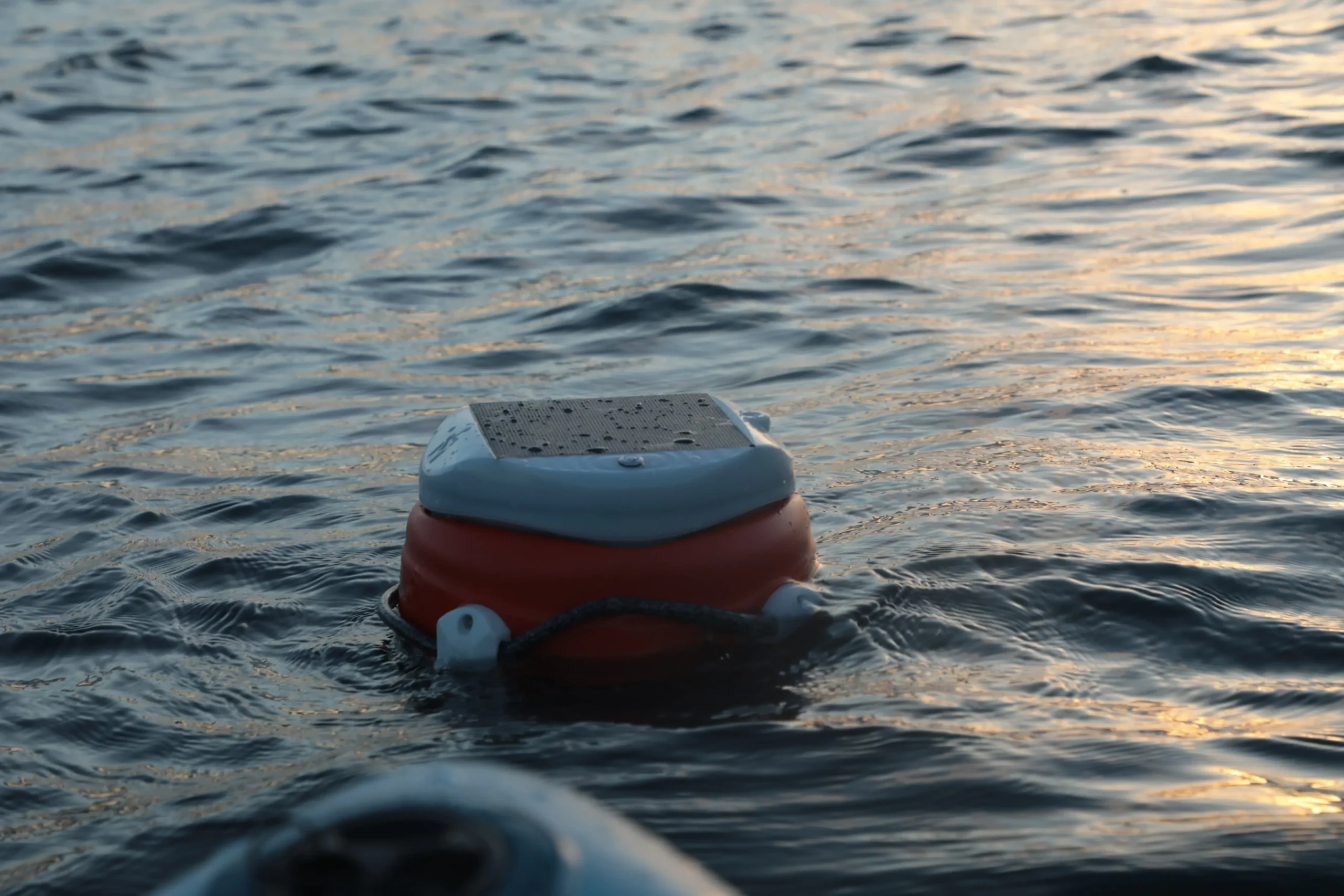
When the clouds stick around, just bring in the brain
A solar powered anchor alarm still needs a reserve. The battery carries the buoy through cloudy spells for up to 72 hours without sunlight. If a run of gray days leaves it needing a top-up:
- Go out by dinghy or paddleboard when conditions allow.
- Once you’re alongside, it takes moments to undo the soft shackle and lift the brain off its magnetic mount. The buoy itself can stay attached to the anchor.
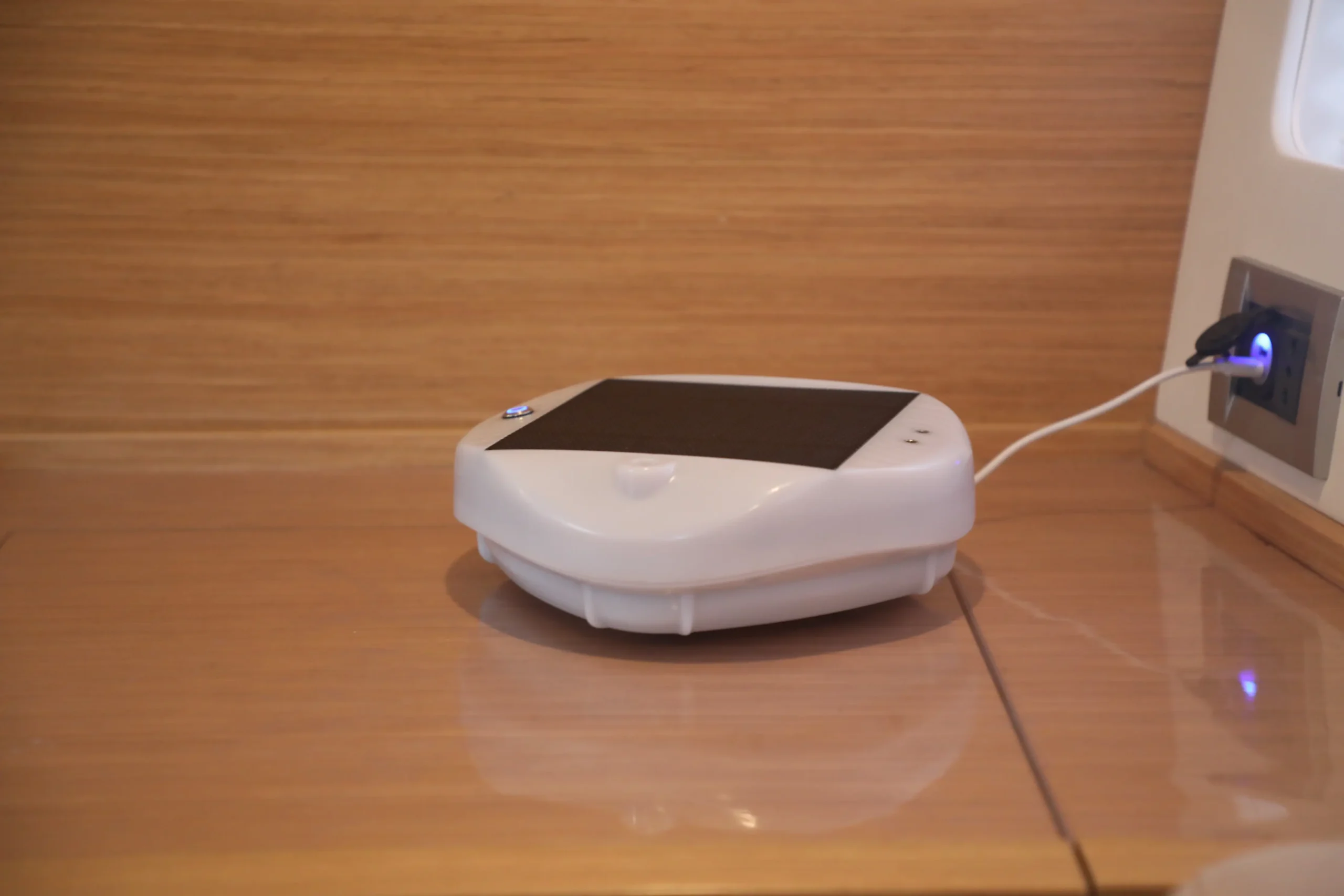
- Back aboard, set the brain on the included wireless charging cradle.
- Use another anchor watch while it charges.
- Put the unit back on the buoy and check the receiver has resumed monitoring.
The onboard receiver has its own rechargeable battery, good for up to 50 hours, and can be topped up by USB-C or on the same cradle. See how the buoy and receiver work together.
What the buoy measures
Morphéis uses the GPS in the buoy to detect changes in the anchor’s position. The buoy sends updates by radio to the onboard receiver, which sounds the alarm if the system detects drag. For more on how it works, see our guide to anchor monitoring systems.
Who a solar powered anchor alarm suits
Many of the sailors we talk to describe the same moment. You arrive somewhere new, drop the hook, and by the next morning you’ve fallen in love with the anchorage. The holding is good, you like the spot, and you decide to stay a couple of weeks. This solar powered anchor alarm is for that kind of stay, and for the people who make those stays regularly.
- Long stays you didn’t plan. Once you know you want to linger, Morphéis lets you do that without a daily charging routine. The buoy stays out, and solar charging tops it up in daylight, so you can enjoy the place you found.
- Liveaboards and cruisers. If you spend weeks at a time in one bay, you need an alarm that keeps working without a fetch-and-charge ritual every day. A solar powered anchor alarm that looks after its own power lets you keep watch on the hook without turning it into another chore.
- Charter skippers. Between running guests, provisioning, and briefings, one more device to remember to charge is one more thing that can get missed. Morphéis is built so it just looks after itself. Deploy it when you anchor, and the solar panel keeps it topped up in daylight.
You still have the wireless cradle as a backup after a run of cloudy days. Day to day, the system is meant to stay in the water and keep working, whether that’s a two-week stay you didn’t plan or a season of moving from one favorite anchorage to the next.
FAQ
What happens after several cloudy days?
The battery can run the buoy for up to 72 hours with zero sun. If it needs a top-up, take the brain off its magnetic mount, charge it on the wireless cradle aboard, and put it back. Use another anchor watch while it charges.
Does the receiver need charging?
Yes. The onboard receiver has its own rechargeable battery, good for up to 50 hours, and can be topped up by USB-C or on the same cradle.
Does it work for long stays?
Yes. We designed this solar powered anchor alarm for typical Mediterranean boating conditions from spring through autumn, including a month in the same anchorage, provided the buoy gets enough sunlight to replace the energy it uses.
See the Morphéis solar powered anchor alarm and what comes with it.